
Key Takeaways
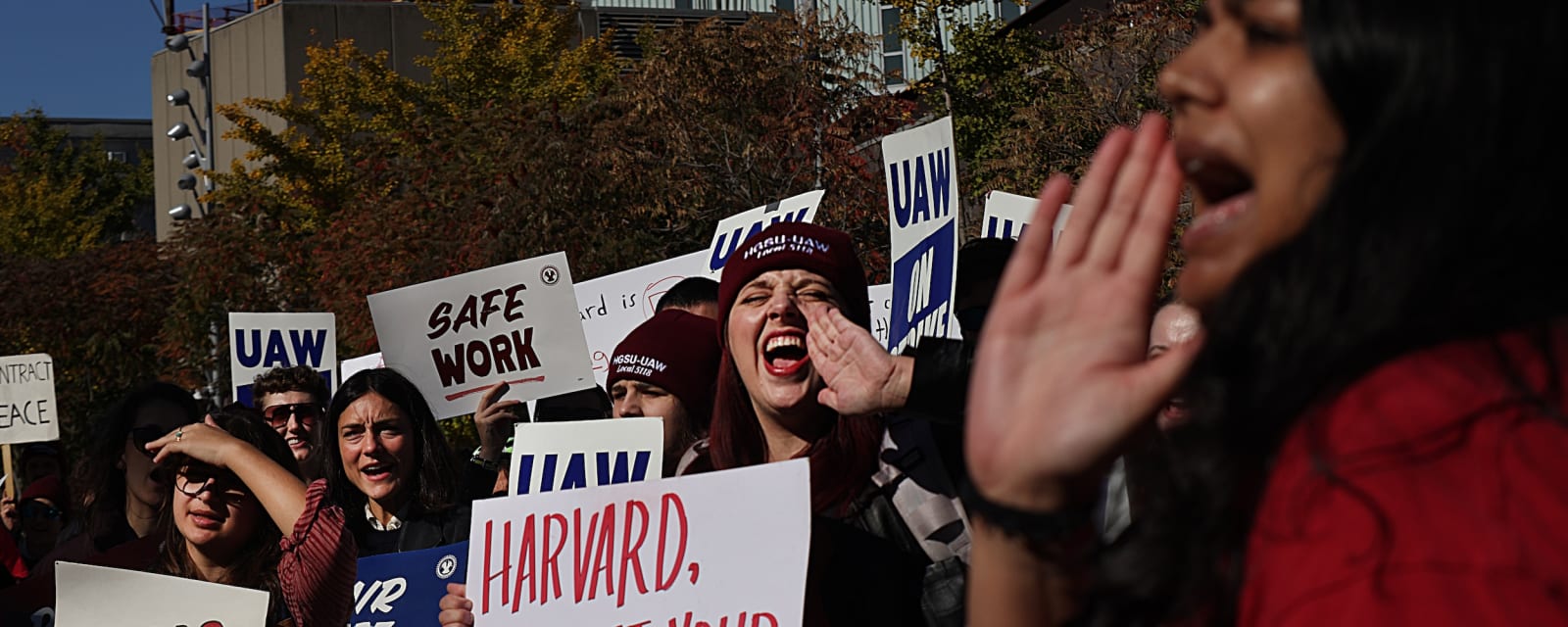
- • Harvard graduate student workers represented by HGSU-UAW Local 5118, a unit of over 4,000 student workers, began their second strike of 2026 at midnight on a Tuesday, with additional Harvard worker strikes expected in coming weeks.
- • The union's demands center on "safe work, fair pay, and the right to stay," including third-party arbitration for harassment and discrimination cases, pay parity with MIT and Brown student workers, and protections for non-citizen and disabled workers.
- • HGSU says Harvard cut over $3 million from benefit funds available under the prior contract, eliminated health, dental and vision access, and cut parental benefits by 50 percent, according to union member Sarah Johns.
- • Harvard reportedly carved out over 900 student workers from the union, arguing that those covered by stipends are not eligible employees, after the prior contract expired June 30, 2025.
- • Two other Harvard groups, the Harvard Academic Workers Union (November 10 strike deadline) and UNITE HERE Local 26 dining workers, have also moved toward strikes.
Summary
Harvard graduate student workers walked off the job on a Tuesday in their second strike of 2026, according to Truthout. The Harvard Graduate Students Union-United Auto Workers Local 5118 (HGSU), which represents more than 4,000 student workers, began the strike at midnight. The action follows a six-week strike in the spring that ended without a contract, and the union's first strike of the year, called off in May after some negotiating progress, did not produce a deal either.
The union says bargaining has stalled. Union bargaining committee member Sarah Johns told Truthout that Harvard showed a lack of momentum over the summer. HGSU President Denish Jaswal wrote in a letter published Tuesday that Harvard had "refused to meaningfully engage" and offered a "regressive contract worse than our last." Johns said Harvard cut over $3 million from benefit funds available under the last contract, removed health, dental and vision coverage, and reduced parental benefits by 50 percent. Students currently have access only to emergency funds, which the union says do not cover costs for people with disabilities or chronic conditions. Jaswal said he earns $26,000, which qualifies him for SNAP benefits in Massachusetts, and that Harvard's offer would raise that to $29,000 by 2029, still within SNAP eligibility.
The union also points to a dispute over how many workers are covered. A day after the contract expired on June 30, 2025, Harvard excluded over 900 student workers from the union, claiming those receiving stipends are not employees eligible for union protection. Harvard has also said it will not bargain over harassment or discrimination policies, which the union considers central to its demands. Johns said one in five student workers reports experiencing harassment or discrimination at Harvard. The union is also seeking codified protections for non-citizen students, including a policy barring ICE agents from campus without a judicial warrant, which is current Harvard policy but not yet contractual.
Other Harvard labor groups are also moving toward action. The Harvard Academic Workers Union, representing non-tenure-track teachers, researchers and staff, has set a November 10 strike deadline after two years of bargaining. Harvard dining workers represented by UNITE HERE Local 26 voted to authorize a strike the prior week. At MIT, graduate students are also preparing to strike and may join a joint action with facilities workers, seeking higher wages and protections for immigrant workers. Johns said the union's membership remains committed, with its largest general membership meeting in its history held before the strike.
Go deeper than the headline
Research every firm in this story, track the ones that matter and get the daily briefing — free for 7 days.