
Key Takeaways
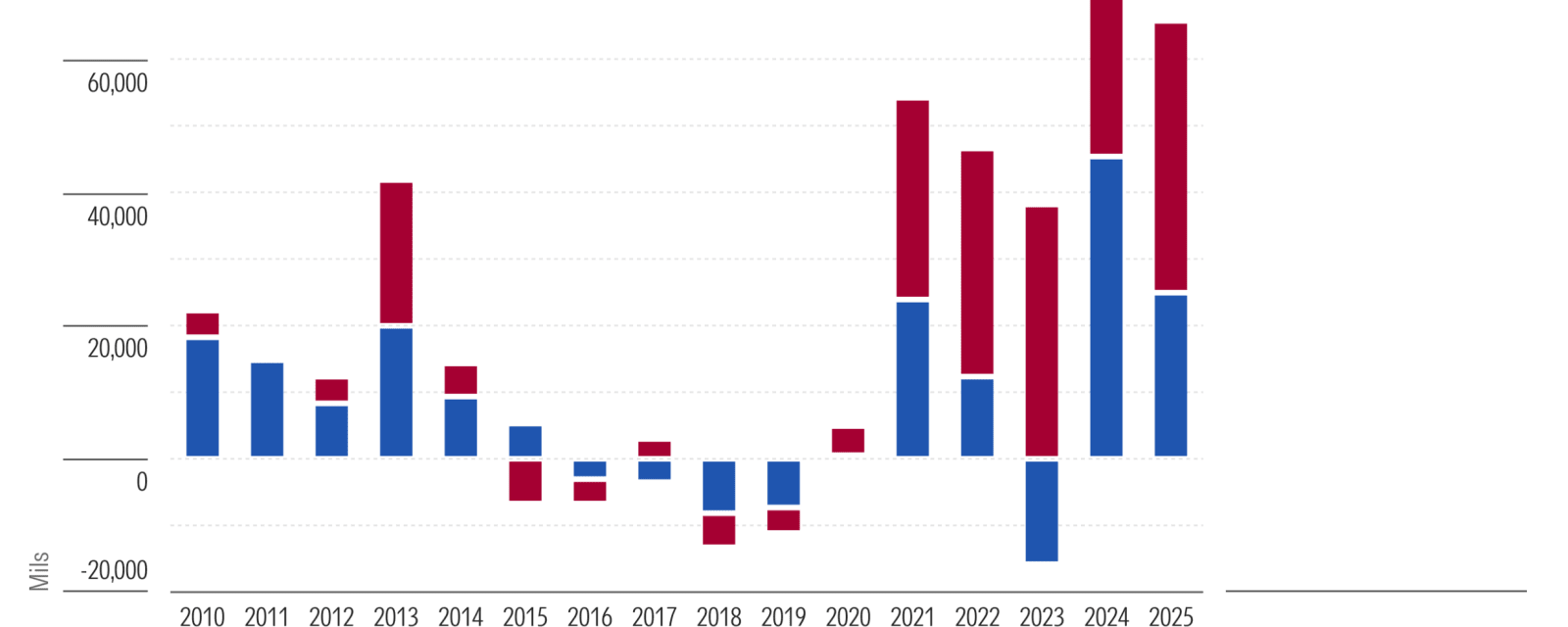
- • Nontraditional equity and liquid alternative strategies achieved record inflows during 2024, with this growth momentum extending into the first half of 2025, signaling sustained institutional and retail demand for diversified asset exposure.
- • Morningstar's research methodology surveyed 600–650 registered financial advisors with median AUM of $100 million across five distribution channels, supplemented by 3,500 affluent investors with $100,000+ in household investable assets, providing representative data for subgroup analysis across advisor types and investor demographics.
- • Private equity (buyouts and growth equity) and venture capital remain the dominant engines within the alternative investment landscape, maintaining their position as the largest and most visible segments driving capital allocation.
- • Alternative asset classes now encompass a broader spectrum including hedge funds, private equity, private credit, and real assets such as real estate and infrastructure, reflecting the industry's structural evolution toward greater access and improved liquidity mechanisms.
Summary
The alternative investment industry continues to experience significant momentum, with nontraditional equity and liquid alternative strategies posting record inflows throughout 2024 that persisted into the first half of 2025. This sustained capital growth reflects a fundamental shift in how institutional investors, registered advisors, and high-net-worth individuals are allocating capital across asset classes beyond traditional equities and bonds.
Morningstar's research framework underlying these trend assessments is based on comprehensive surveying of market participants across multiple segments. The study includes 600–650 registered financial advisors distributed across five distribution channels, each maintaining active client books exceeding $5 million with a median AUM of $100 million. This advisor cohort was further segmented by channel type and usage intensity of alternative investments (non-, light, and heavy users). Complementing this professional perspective, the research incorporates data from 3,500 affluent investors, each holding $100,000 or more in household investable assets (excluding primary real estate), stratified by generation and investor status including accredited and qualified investor classifications.
Within the alternative investment universe, private equity—encompassing both buyouts and growth equity strategies—and venture capital continue to function as the largest and most visible capital engines, driving significant asset flows and deal activity. The broader alternative investment landscape has simultaneously expanded to include hedge funds, private credit, and real asset classes such as real estate and infrastructure. This diversification reflects both regulatory changes and structural market shifts that have enhanced accessibility and liquidity for institutional and retail investors seeking exposure beyond public markets.
The trajectory observed through 2025 demonstrates that alternative investments have transitioned from a niche institutional domain to a mainstream allocation component. Improved liquidity mechanisms and greater access channels have enabled a wider investor base to participate in this segment, while continued inflows underscore confidence in the risk-adjusted return potential of these strategies relative to traditional asset classes in the current macroeconomic environment.
Morningstar's research framework underlying these trend assessments is based on comprehensive surveying of market participants across multiple segments. The study includes 600–650 registered financial advisors distributed across five distribution channels, each maintaining active client books exceeding $5 million with a median AUM of $100 million. This advisor cohort was further segmented by channel type and usage intensity of alternative investments (non-, light, and heavy users). Complementing this professional perspective, the research incorporates data from 3,500 affluent investors, each holding $100,000 or more in household investable assets (excluding primary real estate), stratified by generation and investor status including accredited and qualified investor classifications.
Within the alternative investment universe, private equity—encompassing both buyouts and growth equity strategies—and venture capital continue to function as the largest and most visible capital engines, driving significant asset flows and deal activity. The broader alternative investment landscape has simultaneously expanded to include hedge funds, private credit, and real asset classes such as real estate and infrastructure. This diversification reflects both regulatory changes and structural market shifts that have enhanced accessibility and liquidity for institutional and retail investors seeking exposure beyond public markets.
The trajectory observed through 2025 demonstrates that alternative investments have transitioned from a niche institutional domain to a mainstream allocation component. Improved liquidity mechanisms and greater access channels have enabled a wider investor base to participate in this segment, while continued inflows underscore confidence in the risk-adjusted return potential of these strategies relative to traditional asset classes in the current macroeconomic environment.
Go deeper than the headline
Research every firm in this story, track the ones that matter and get the daily briefing — free for 7 days.