
Key Takeaways
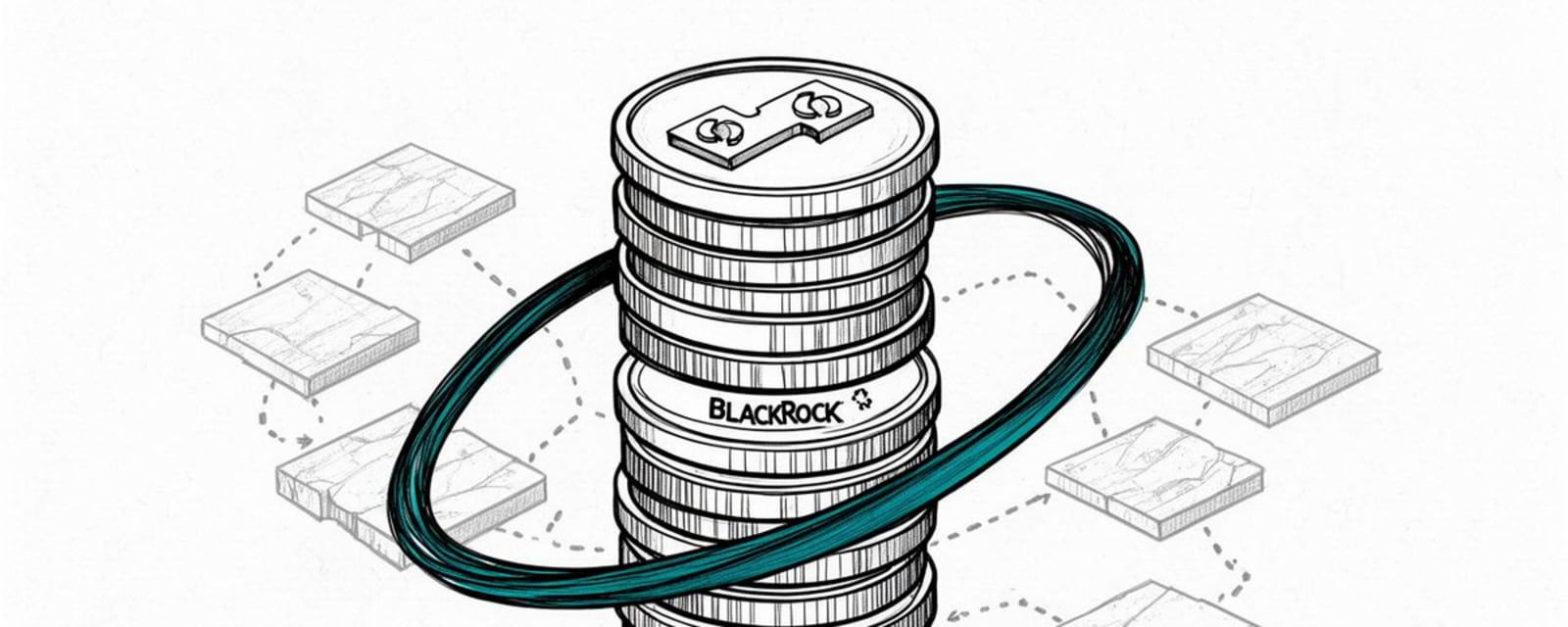
- • BlackRock's BUIDL tokenized money-market fund has grown to roughly $2.3 billion since its 2024 launch, according to Bloomberg, placing it among the largest products of its kind.
- • BlackRock is positioning tokenized money-market funds as collateral for traditional finance, where banks would accept them as margin and move ownership without prior redemption.
- • Tokenized cash products have been added in the U.S. and Europe, and a Hong Kong dollar digital liquidity fund was approved in September, accepting both conventional and digital cash.
- • BlackRock's tokenized funds are already used as collateral within the digital-asset market, but mainstream adoption depends on bank acceptance, infrastructure and legal certainty.
- • The IMF and ISDA flag fragmented platforms, legal uncertainty, custody and margin treatment, and cross-border recognition as unresolved obstacles.
Summary
BlackRock Inc. is pushing tokenized money-market funds beyond their origins as a crypto-native yield product and toward a role in how traditional Wall Street firms post collateral and transfer ownership. Executives acknowledge that regulatory and infrastructure gaps remain. The firm's first tokenized money-market fund, BUIDL, has reached roughly $2.3 billion since its 2024 launch, according to Bloomberg. BlackRock has since rolled out tokenized cash products in the United States and Europe and, in September, won approval for a Hong Kong dollar digital liquidity fund that can accept both conventional and digital cash.
BlackRock's digital-assets team distinguishes between the underlying asset and the infrastructure that carries it. Tokenization does not change what a money-market fund owns; it changes how ownership can move. Tokenized shares can be transferred between approved investors, potentially allowing an institution to shift a position without first redeeming it for cash. Dan Maley, who oversees BlackRock's cash business in Asia Pacific, said the larger opportunity arises when traditional financial institutions can use these instruments. Maley said BlackRock's tokenized funds are already used as collateral within the digital-asset market. Extending that practice to mainstream finance requires banks and other institutions to accept the instruments as collateral, market infrastructure to accommodate them, and rules that provide sufficient legal certainty.
Money-market funds already back trading positions as initial and variation margin, and tokenization could ease their movement without a prior redemption, allowing institutions to keep assets invested for longer. Obstacles extend beyond technology. The International Monetary Fund has flagged fragmented platforms, legal uncertainty and difficulty linking to existing financial infrastructure. The International Swaps and Derivatives Association (ISDA) has raised operational concerns. Its chief executive, Scott O'Malia, said questions on custody and segregation frameworks, capital and margin treatment, cross-border recognition and legal certainty must be addressed through industry standards and regulatory clarity. These gaps help explain why tokenized assets can circulate efficiently on a blockchain yet remain largely absent from conventional collateral and settlement systems, and why investors cannot necessarily redeem tokens for cash at any hour.
BlackRock's earliest users came mainly from crypto. Nikhil Sharma, a director on the firm's digital-assets team, said many were investors holding stablecoins on-chain seeking yield, and that the move into collateral emerged from that same group. Sharma said investors are asking how tokenized products fit into current workflows, including through established custodians and asset servicers, and that adoption will "accelerate from here." For investors, the significance lies in the balance-sheet flexibility such products could eventually provide. If tokenized fund shares gain broad acceptance as margin, institutions could reduce the cash drag of repeated redemptions. That outcome depends on standards bodies and regulators resolving custody, capital treatment and cross-border recognition questions first.
Go deeper than the headline
Research every firm in this story, track the ones that matter and get the daily briefing — free for 7 days.