
Key Takeaways
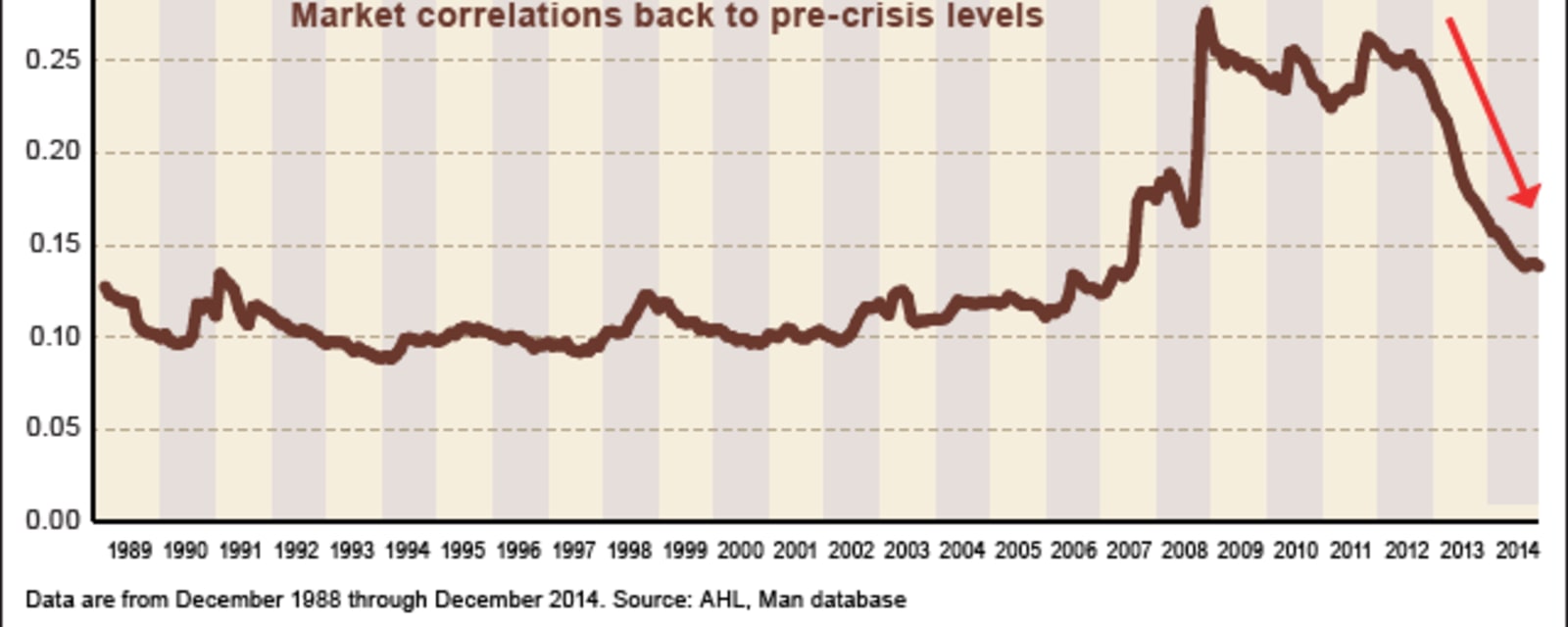
- • Managed futures strategy shows optimistic performance outlook driven by two historically significant performance factors: correlation dynamics and trend-following mechanics, according to Pensions & Investments analysis dated March 30, 2015.
- • The strategy continues to attract institutional investor interest as a diversification tool, with Mount Lucas Management executives highlighting the case for portfolio inclusion alongside traditional equity and fixed-income allocations.
- • Managed futures employ market-neutral and trend-following approaches, enabling strategies to profit across different market conditions and demonstrating historical resilience during periods that challenge traditional stock-and-bond portfolios.
- • The strategy appeals to sophisticated institutional investors seeking systematic exposure to global macro trends with the ability to deploy both long and short positions.
Summary
Managed futures strategies maintained an optimistic investment outlook as of March 2015, with industry analysis focusing on the two fundamental drivers of performance: correlation patterns and trend identification. According to Pensions & Investments' coverage by Lawrence Kissko, the historical performance drivers of managed futures remain central to understanding the strategy's role in diversified institutional portfolios.
Mount Lucas Management, a prominent manager in the space, emphasized the strategic case for adding managed futures exposure, with executives highlighting how the approach delivers meaningfully different portfolio characteristics compared to traditional stock and bond holdings. The strategy's ability to generate returns across both bullish and bearish market environments—through market-neutral positioning and systematic trend-following mechanisms—positions it as a potential hedge during equity market dislocations.
Managed futures strategies typically employ two primary approaches: market-neutral tactics that seek consistent returns regardless of market direction, and trend-following systems that identify and capitalize on directional movements across multiple asset classes and geographies. This dual-strategy framework allows institutional investors to access global macro exposure while maintaining flexibility in market positioning.
Industry documentation reveals that managed futures strategies have demonstrated historical outperformance during periods when traditional equities and bonds face simultaneous headwinds. The complexity and risk profile of these strategies have traditionally been marketed primarily to high-net-worth individuals and sophisticated institutional investors with established risk management infrastructure.
The optimistic outlook reflected in 2015 positioning underscored institutional investor appetite for alternative allocations that could enhance portfolio resilience and reduce concentration risk inherent in traditional 60/40 equity-bond constructs.
Go deeper than the headline
Research every firm in this story, track the ones that matter and get the daily briefing — free for 7 days.