
Key Takeaways
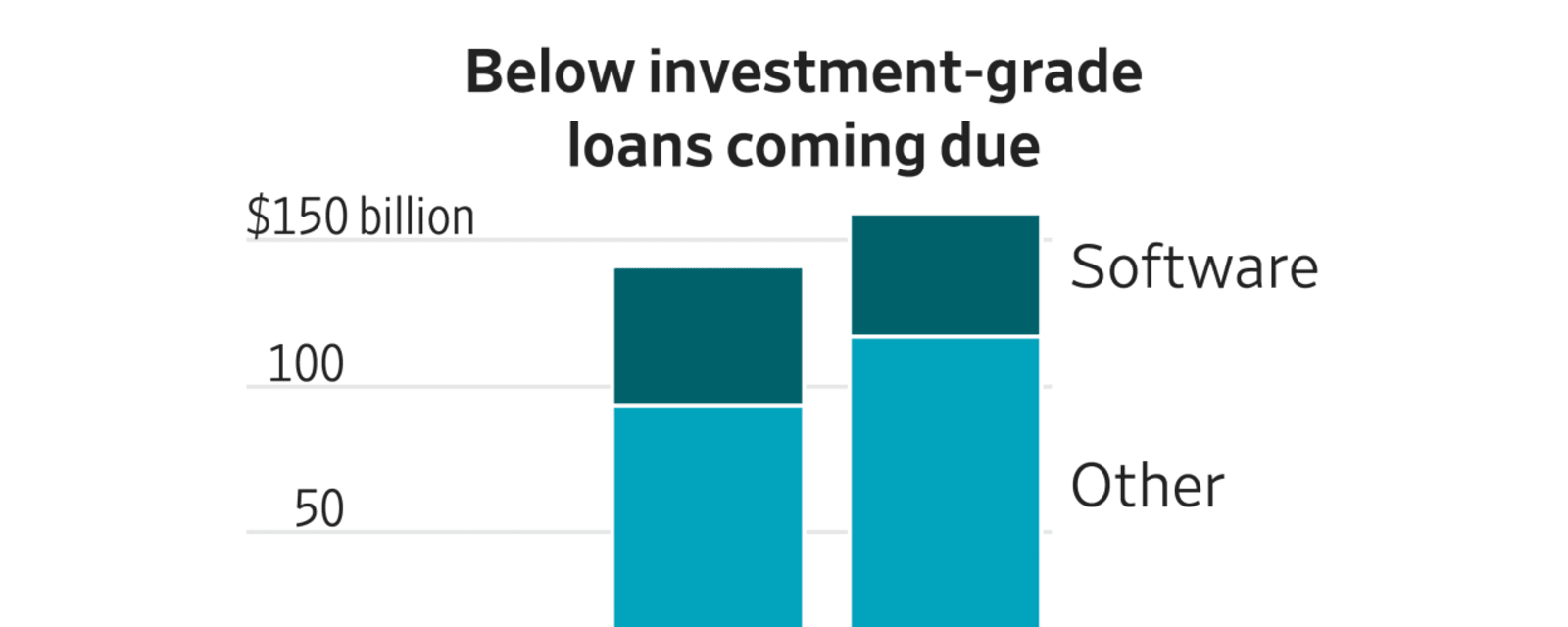
- • Private-equity firms face a roughly $300 billion wall of debt coming due starting in 2028, according to the Wall Street Journal, and are racing to negotiate loan extensions to avoid large losses from potential defaults among portfolio companies.
- • Rising interest rates have made refinancing more expensive in 2026, intensifying the pressure on fund managers to extend maturities before the wall arrives.
- • A significant share of the exposure sits with software companies that risk being eclipsed by artificial-intelligence companies, a competitive threat the article links to the timing of Anthropic's large IPO launched the same day.
Summary
Private-equity firms are working to limit potential losses from a possible wave of defaults among the companies they own, according to a Wall Street Journal report. Fund managers are negotiating loan extensions on much of a $300 billion stack of debt that begins coming due in 2028.
The urgency stems from higher interest rates, which have made refinancing more costly during 2026. Lenders and sponsors that might otherwise roll maturities forward now face materially higher borrowing costs, narrowing the options available to portfolio companies carrying leveraged balance sheets.
The article identifies software companies as a major part of the exposure. These businesses face the risk of being overtaken by artificial-intelligence companies, a dynamic the report frames against the backdrop of Anthropic's giant initial public offering, which launched on Monday. The piece does not provide a breakdown of individual borrowers, lenders, or fund names, and the figures above reflect the reporting as published.
Go deeper than the headline
Research every firm in this story, track the ones that matter and get the daily briefing — free for 7 days.