
Key Takeaways
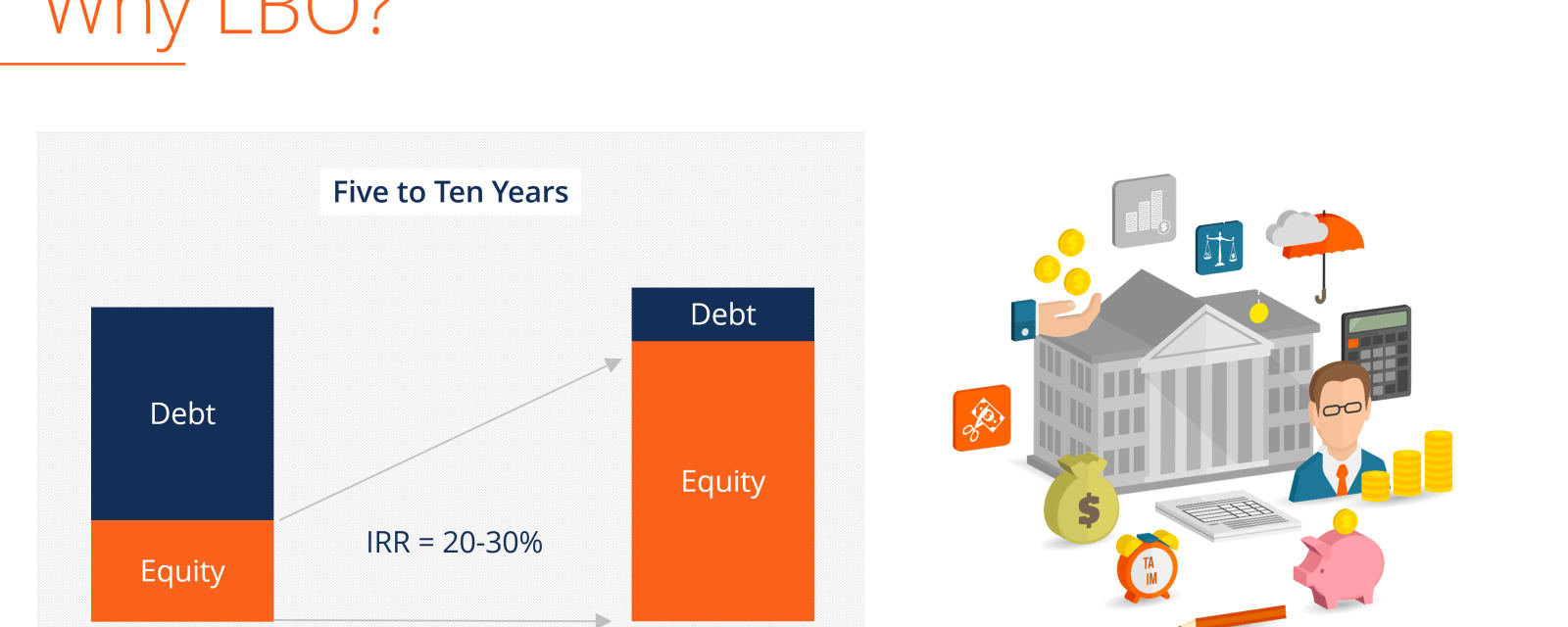
- • Private equity firms in a leveraged buyout (LBO) typically borrow up to 70 to 80 percent of the purchase price, funding the balance with their own equity, according to Corporate Finance Institute (CFI).
- • Leverage magnifies sponsor returns on equity and IRR, which are typically targeted at 20 to 30 percent or higher, but it also raises the risk of restructuring and wiped-out equity if cash flow weakens.
- • Suitable LBO targets are mature, stable, non-cyclical companies with predictable cash flows, high margins, low capital expenditures and manageable existing debt.
- • A standard LBO model follows seven steps, from a five-year standalone forecast through sponsor IRR calculation and sensitivity analysis.
Summary
A leveraged buyout is an acquisition in which debt serves as the primary source of consideration, according to Corporate Finance Institute (CFI). Private equity firms typically borrow as much as lenders will provide, up to 70 to 80 percent of the purchase price, and fund the remainder with their own equity. CFI notes that because PE firms are compensated on financial returns, leverage is central to reaching targeted internal rates of return, typically 20 to 30 percent or higher, assuming the plan performs as expected.
CFI cautions that leverage cuts both ways. Layering multiple debt tranches onto an operating company materially increases transaction risk, which is why LBOs typically target stable businesses. If cash flow tightens during an economic downturn, the company may be unable to service its debt and would have to restructure, most likely wiping out returns to the equity sponsor.
According to the article, strong LBO candidates are mature, stable, non-cyclical and predictable, with predictable cash flows, high margins, relatively low capital expenditures, manageable existing debt, stable industry conditions and opportunities to improve operating performance. Steady free cash flow is what allows the company to service acquisition debt, with all available cash typically directed toward repayment.
The modeling process starts with a standalone forecast of the target, usually about five years with a terminal value. Analysts link the three financial statements, build interest and debt schedules, model credit metrics to test how much leverage the deal can bear, calculate free cash flow to the sponsor, determine sponsor IRR and run sensitivity analysis. The model is then presented to banks and lenders to secure debt financing, after which final terms are set. CFI adds that the work intensifies after closing, when the sponsor and management must grow revenue, cut costs and pay down debt to realize returns.
CFI identifies additional modeling complexity in LBOs, including high leverage, multiple debt tranches, complex bank covenants, preferred share issuance, management equity compensation and targeted operational improvements. The article is an educational guide and does not report on specific transactions or deal values.
CFI cautions that leverage cuts both ways. Layering multiple debt tranches onto an operating company materially increases transaction risk, which is why LBOs typically target stable businesses. If cash flow tightens during an economic downturn, the company may be unable to service its debt and would have to restructure, most likely wiping out returns to the equity sponsor.
According to the article, strong LBO candidates are mature, stable, non-cyclical and predictable, with predictable cash flows, high margins, relatively low capital expenditures, manageable existing debt, stable industry conditions and opportunities to improve operating performance. Steady free cash flow is what allows the company to service acquisition debt, with all available cash typically directed toward repayment.
The modeling process starts with a standalone forecast of the target, usually about five years with a terminal value. Analysts link the three financial statements, build interest and debt schedules, model credit metrics to test how much leverage the deal can bear, calculate free cash flow to the sponsor, determine sponsor IRR and run sensitivity analysis. The model is then presented to banks and lenders to secure debt financing, after which final terms are set. CFI adds that the work intensifies after closing, when the sponsor and management must grow revenue, cut costs and pay down debt to realize returns.
CFI identifies additional modeling complexity in LBOs, including high leverage, multiple debt tranches, complex bank covenants, preferred share issuance, management equity compensation and targeted operational improvements. The article is an educational guide and does not report on specific transactions or deal values.
Go deeper than the headline
Research every firm in this story, track the ones that matter and get the daily briefing — free for 7 days.