
Key Takeaways
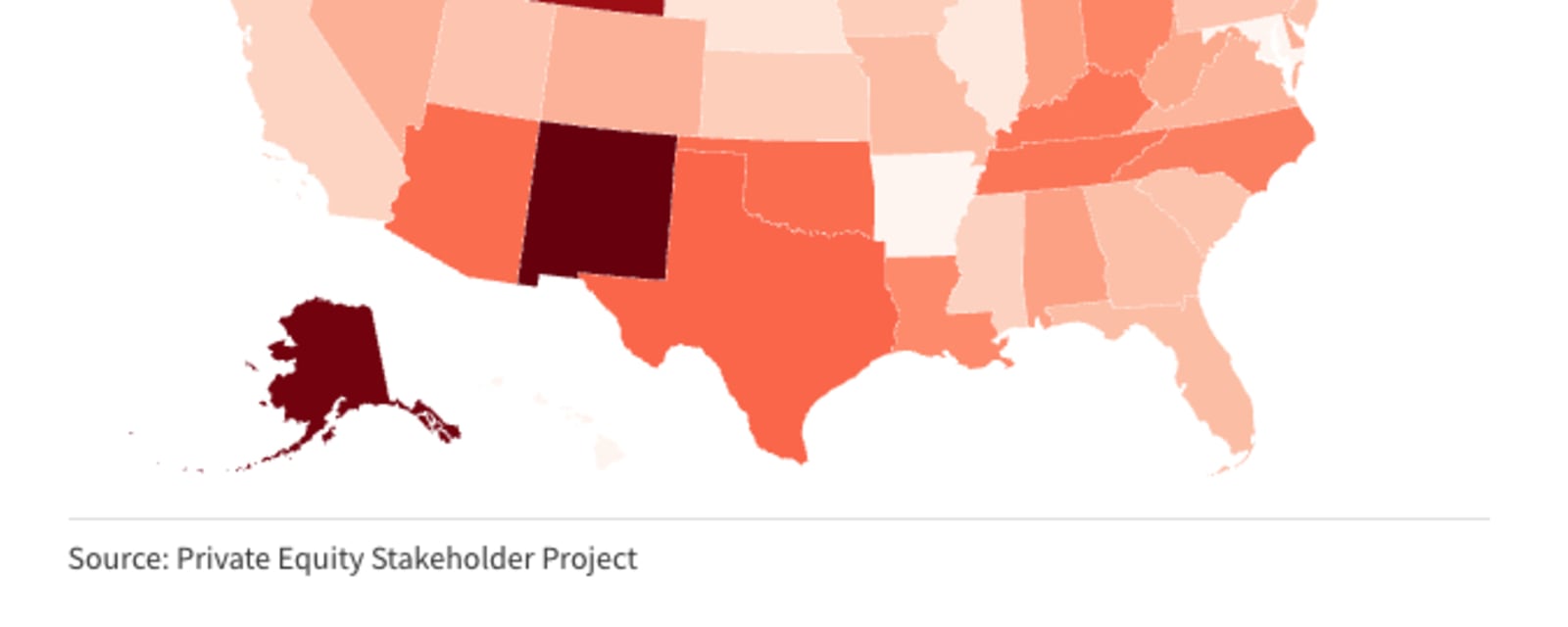
- • The Private Equity Stakeholder Project (PESP) updated its Private Equity Hospital Tracker in late October 2026, finding private equity firms now own 561 U.S. hospitals, up from 447 in July 2026, a net addition of 114 facilities.
- • PE-backed operators control 11.9% of all private hospitals (up from 9.5% in July) and 33.6% of proprietary for-profit hospitals (up from 26.8% earlier in the year).
- • The update was triggered by the $3.9 billion acquisition of Select Medical by an investment consortium that includes Welsh, Carson, Anderson & Stowe (WCAS), which now directly oversees 124 hospitals, making it the second-largest PE hospital portfolio owner nationally.
- • The Select Medical deal closed on July 1, 2026 without prior notice to the Massachusetts Health Policy Commission (HPC), which requires 60 days' notice; the filing was made October 15, 2026 and remains under active review.
- • At least 144 PE-owned hospitals use REIT sale-leaseback arrangements, and about 23% operate through non-profit joint ventures, per the tracker.
Summary
The Private Equity Stakeholder Project (PESP) released an updated edition of its Private Equity Hospital Tracker in late October 2026, reporting that private equity firms now own nearly one in eight private hospitals in the United States. The count of PE-owned hospitals rose to 561 from 447 in PESP's July 2026 dataset. PE-backed operators now control 11.9% of all private hospitals, which include proprietary for-profit and non-profit facilities, and more than one-third (33.6%) of investor-owned, for-profit hospitals, up from 26.8% earlier in the year.
The update was prompted by the $3.9 billion acquisition of Select Medical by an investment consortium that includes Welsh, Carson, Anderson & Stowe (WCAS). Through that deal and its existing controlling stake in Emerus Hospital Partners, the nation's largest micro-hospital operator, WCAS now directly oversees 124 hospitals, making it the second-largest PE hospital portfolio owner in the country.
The transaction also highlights friction with state oversight. Massachusetts enacted transaction review legislation in early 2025 after the collapse of Steward Health Care, requiring Notices of Material Change to be filed with the Health Policy Commission at least 60 days before a transaction altering ownership or governance. The Select Medical acquisition closed on July 1, 2026 without prior notice. After outreach from PESP in August, the HPC determined the deal was a mandatory material change; Select Medical filed its notice on October 15, 2026, more than three months after closing. As of late October, the notice remains under active review, and no enforcement remedies or structural conditions have been publicly disclosed.
The tracker also identifies two financing strategies common in PE hospital ownership. At least 144 PE-owned hospitals operate under sale-leaseback arrangements in which real estate was sold to REITs such as Medical Properties Trust, releasing upfront liquidity while leaving operators with long-term, inflation-escalating lease obligations. Roughly 23% of PE-owned hospitals operate through joint ventures with tax-exempt non-profit health systems, which PESP says provide clinical credibility and referral access while limiting public disclosure of capital structures.
PESP Executive Director Jim Baker warned that the industry is still making multi-billion-dollar bets on hospitals despite failures at Steward Health Care and Prospect Medical Holdings/Crozer Health, stating that patients and healthcare workers bear the risk when those bets fail. The article notes that PE firms have shifted away from distressed rural and safety-net acute care facilities toward specialized post-acute assets, and that states including California, Massachusetts, New York and Minnesota have adopted pre-transaction review, which can delay closings by four to six months beyond standard Hart-Scott-Rodino waiting periods. Lawmakers entering the post-midterm legislative cycle are reportedly building bipartisan support for rules requiring disclosure of PE capitalization tables, limits on dividend recapitalizations, and restrictions on master-lease encumbrances.
Go deeper than the headline
Research every firm in this story, track the ones that matter and get the daily briefing — free for 7 days.