
Key Takeaways
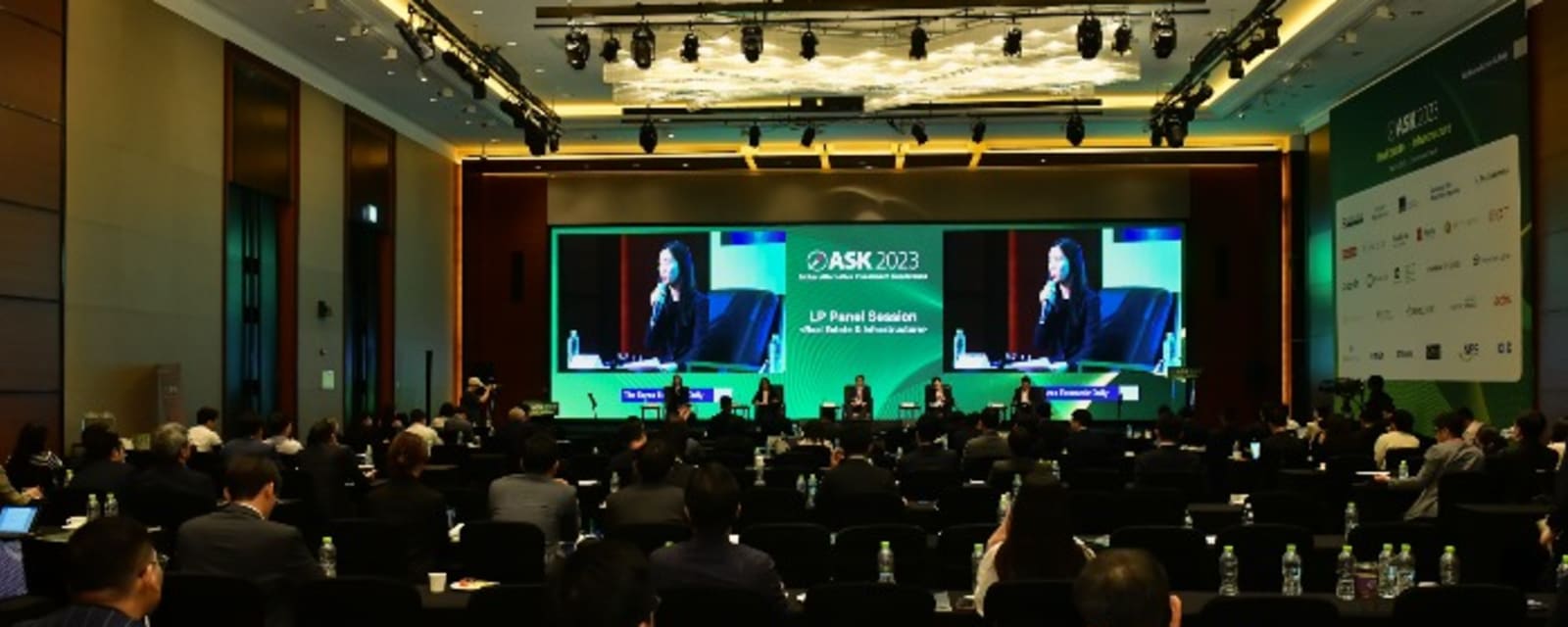
- • U.S. office sector recovery will be notably slow amid market volatility and uncertainty, according to real asset managers presenting at ASK 2023, the Korea Economic Daily's biannual alternative investments forum held at Conrad Seoul in May 2023.
- • South Korean institutional investors and real asset managers expect prolonged headwinds in U.S. office markets, contrasting with broader economic recovery expectations in their home market driven by consumption and semiconductor exports.
- • Korean economy projected to grow 1.9% in 2026 by AMRO (ASEAN+3 Macroeconomic Research Office), with inflation contained near 2.1% in 2025, supporting domestic recovery despite global uncertainty and construction investment contraction.
- • South Korean stock market has experienced elevated volatility linked to external geopolitical shocks and U.S. Federal Reserve policy uncertainty, with foreign investor sentiment serving as a critical indicator for KOSPI index recovery above the 6,000-point level.
- • Construction investment in South Korea continues to contract amid real estate project financing distress, offsetting gains from private consumption rebound and robust export performance in semiconductors.
Summary
Real asset managers from Korean institutions conveyed a cautious outlook on U.S. office market recovery at ASK 2023, the biannual global alternative investment forum hosted by The Korea Economic Daily in May 2023. Participants at the Conrad Seoul event emphasized that the U.S. office sector faces a protracted recovery trajectory within a volatile and uncertain market environment, signaling limited near-term improvement for institutional investors with exposure to American commercial real estate.
This bearish sentiment on U.S. office markets stands in contrast to more optimistic expectations for South Korea's broader economic recovery. According to AMRO's assessment, South Korea's economy demonstrated resilience through 2025 despite significant headwinds, including political uncertainty that weighed on early-year growth. The economy rebounded in the second half of 2025 as political stability improved following leadership transitions, with private consumption strengthening and semiconductor exports remaining robust. AMRO projects 2.9% GDP growth for 2026 as the recovery gains momentum, with inflation remaining well-contained near the Bank of Korea's target of approximately 2.1%.
However, structural weakness persists in South Korea's real estate sector. Construction investment has continued to contract amid distress in real estate project financing, representing a headwind to overall growth despite improvements in consumer spending and export activity. This domestic real estate weakness likely informs Korean institutional investors' caution toward U.S. office markets, which face comparable challenges including elevated vacancy rates and reduced tenant demand.
South Korean equity markets have experienced pronounced volatility, with the KOSPI benchmark declining sharply on geopolitical concerns and U.S. monetary policy uncertainty. Analysts identify foreign investor sentiment as the critical variable determining whether the KOSPI can sustain recovery above the 6,000-point psychological level. The Korean won has also exhibited excessive volatility, prompting U.S. and South Korean officials to acknowledge in April 2026 that such currency fluctuations are undesirable for economic stability and investor confidence.
Go deeper than the headline
Research every firm in this story, track the ones that matter and get the daily briefing — free for 7 days.