
Key Takeaways
- • Venture capitalists invested a record $37.9 billion across 269 defense tech deals in the third quarter of 2026, up 117.5% from the prior quarter, according to PitchBook data cited by Fortune.
- • Washington Harbour Partners founder and CEO Mina Faltas said activity in capital markets "reminds me of 2021," and argued that capital shifting from SaaS into deep tech has brought in investors who are not sector experts.
- • Eclipse partner Aidan Madigan-Curtis described a "pretty big YOLO sentiment" in physical tech investing, with some investors prioritizing the team and prior round signals over underwriting of real capabilities.
- • Early-stage defense startups have fetched 17 to 50 times revenue, and Anduril cofounder Trae Stephens called mid-stage valuations "completely disconnected from reality."
- • Selling to the Pentagon remains the hardest test for defense startups, with Faltas noting the department is not a monolithic customer and requires engagement across "five corners."
Summary
Venture capital investment in defense technology reached a record $37.9 billion in the third quarter of 2026, across 269 deals, according to PitchBook data cited by Fortune. The figure represents a 117.5% increase from the prior quarter. Valuations have risen alongside funding, with early-stage defense startups fetching 17 to 50 times revenue, according to Fortune reporting earlier in the year.
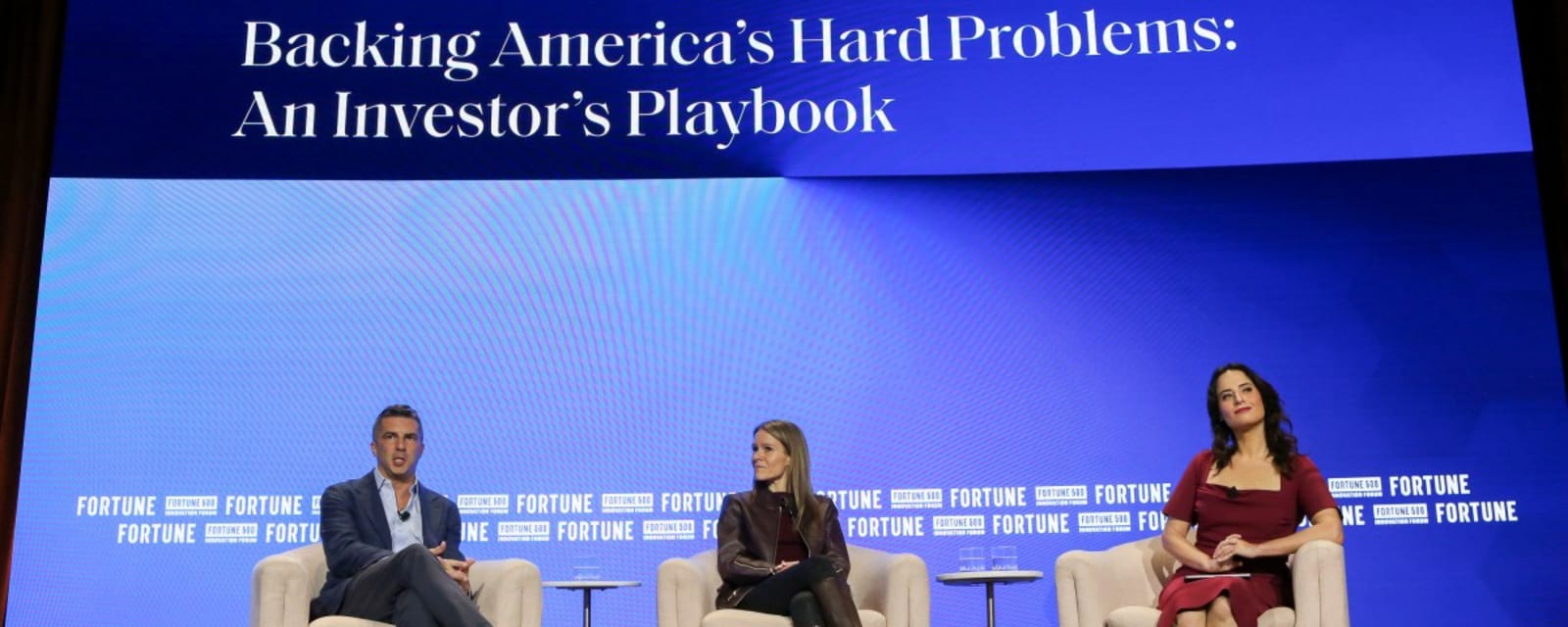
Two prominent investors speaking at the Fortune 500 Innovation Forum in Detroit this week compared current conditions to 2021. Mina Faltas, founder and CEO of Washington Harbour Partners, said he sees capital markets activity that reminds him of that period. He attributed the inflow to the decline of SaaS and AI-driven disruption, which have pushed capital into deep tech, space, robotics, energy and defense, often by investors who are not experts in those sectors. Aidan Madigan-Curtis, a partner at Eclipse, described a "pretty big YOLO sentiment" in physical tech investing, arguing that some investors weight the identity of prior investors more heavily than rigorous assessment of capabilities.
Sector leaders have also expressed concern. Anduril cofounder Trae Stephens told Fortune in June that mid-stage defense startups trade at multiples that are "completely disconnected from reality."
The froth coincides with broader market disruption. Jensen Huang resigned as Nvidia CEO on November 12 under pressure from the chipmaker's board, a development the article says has left the startup ecosystem primed for change. AI startups are most exposed, though private capital markets more broadly are in flux, including deep-tech bets in defense.
For startups, selling to the government remains the central challenge. Faltas said the Pentagon, which has used the name Department of War as a secondary title since a 2025 executive order, is not a single buyer. "The building itself is... called the Pentagon. It's got five corners, and each of those five corners needs to be engaged with, and educated with, and listened to," he said, calling for a focused ground game.
Go deeper than the headline
Research every firm in this story, track the ones that matter and get the daily briefing — free for 7 days.