
Key Takeaways
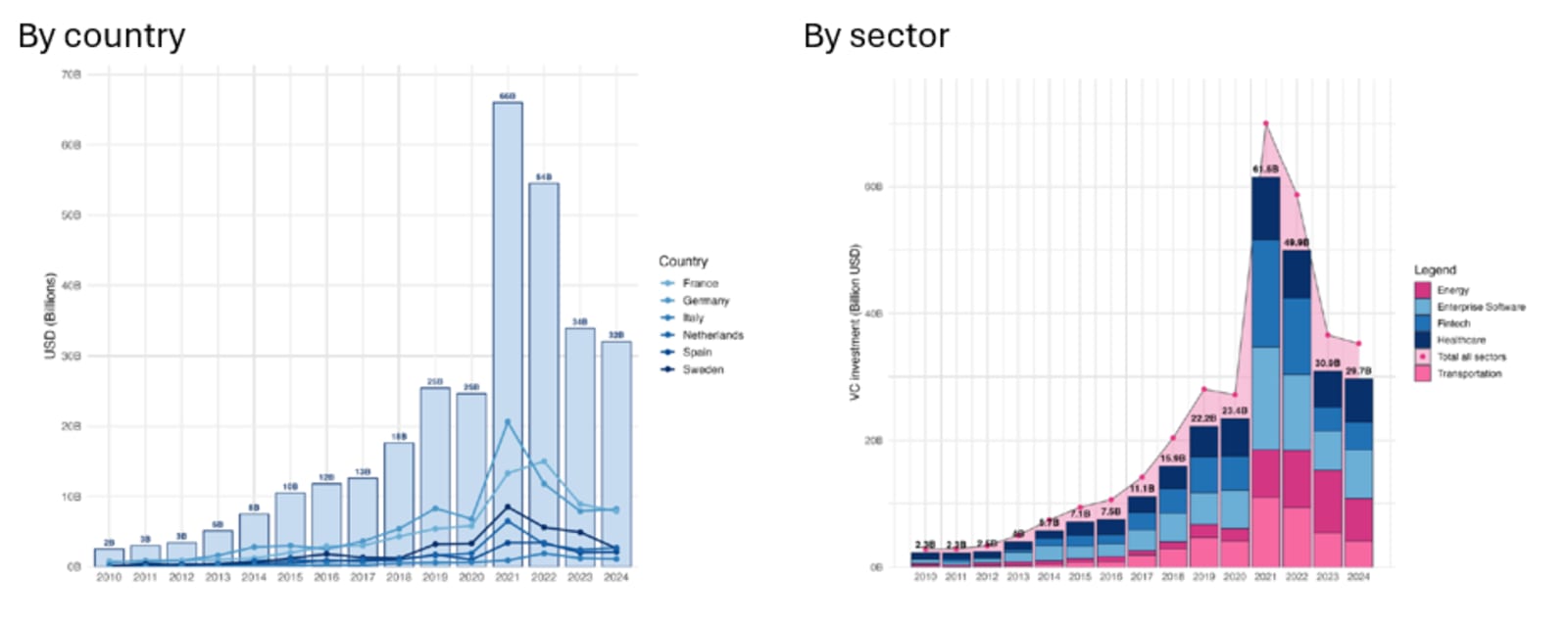
- • European venture and growth funding significantly lags US levels, particularly in later-stage financing, forcing scaled startups to seek capital abroad and limiting the continent's ability to develop technology champions.
- • Europe's mainstream alternative investment fund market holds approximately EUR 8.2 trillion in assets under management, representing an underutilized reservoir of capital that could be mobilized for growth-stage companies through regulatory reform.
- • The CFA Institute recommends expanding the EU's light-touch venture capital fund format, raising fund size thresholds, and reducing cross-border marketing barriers within the EU to facilitate capital deployment for innovative firms.
- • Regulatory fragmentation across European markets and stringent compliance requirements for fund managers discourage scaling activities and limit institutional capital's flow to growth-stage startups, despite Europe's strength in early-stage innovation.
- • Reforming the EU's alternative investment fund framework—rather than waiting for pension fund development—offers immediate policy levers to unlock growth capital and enable European startups to scale domestically.
Summary
Europe faces a structural financing gap that prevents innovative startups from scaling despite the continent's demonstrated capacity for early-stage innovation and scientific advancement. While Europe produces a disproportionately large number of startups and maintains global leadership in science and research, venture and growth funding remains substantially below US levels, particularly in later development stages. This capital constraint forces many European firms to seek investors abroad as they mature, preventing the emergence of European technology champions—companies that traditionally serve as primary drivers of productivity growth.
The financing bottleneck is not attributable to a shortage of available capital. Mainstream alternative investment funds across the EU manage approximately EUR 8.2 trillion in assets, yet regulatory barriers prevent this capital from efficiently reaching growth-stage innovative companies. The fragmentation of European fund markets, combined with regulatory hurdles that discourage fund managers from scaling operations, creates structural impediments to capital mobilization. Additionally, complex compliance requirements and barriers to cross-border fund marketing within the EU further constrain the flow of institutional capital to scaling startups.
In response to European Commission consultation, the CFA Institute has proposed practical regulatory reforms to address these constraints. Key recommendations include widening the scope of the EU's light-touch venture capital fund format, raising asset thresholds that currently limit fund size, and reducing regulatory barriers that discourage fund managers from scaling activities. The Institute also advocates for establishing more open and predictable market access for non-EU investors and fund managers, alongside reducing cross-border marketing barriers within member states.
While strengthening pension fund systems—historically the primary source of innovation financing—remains important, such structural development requires substantial time to implement. Regulatory reform of the alternative investment fund framework offers immediate policy interventions that policymakers can execute to unlock Europe's vast savings pools and redirect them toward growth-stage capital requirements. These reforms aim to integrate Europe's fragmented fund market and establish conditions where innovative companies can scale domestically rather than migrating capital-raising activities elsewhere.
Go deeper than the headline
Research every firm in this story, track the ones that matter and get the daily briefing — free for 7 days.