
Key Takeaways
- • Singapore's National Environment Agency (NEA) signed a Memorandum of Cooperation with the US Nuclear Regulatory Commission on April 17, 2026, establishing a two-year training programme focused on nuclear safety capabilities and regulatory expertise.
- • NEA officers will undertake courses and practical attachments at the US NRC covering reactor regulation, safety assessments, probabilistic risk assessment, and inspection procedures—critical areas for developing Singapore's nuclear regulatory infrastructure.
- • The agreement signals Singapore's active pursuit of nuclear energy feasibility as a low-carbon alternative to meet net-zero goals and strengthen energy security, with the country commissioning complementary safety studies in March 2026.
- • The training programme directly supports NEA's newly formed Nuclear Safety Division (established October 2025), positioning Singapore to evaluate nuclear deployment with world-class regulatory expertise aligned with international standards.
- • This bilateral cooperation reflects Singapore's systematic approach to nuclear readiness, combining regulatory skills development with parallel technical assessments of design, safety systems, and accident prevention protocols.
Summary
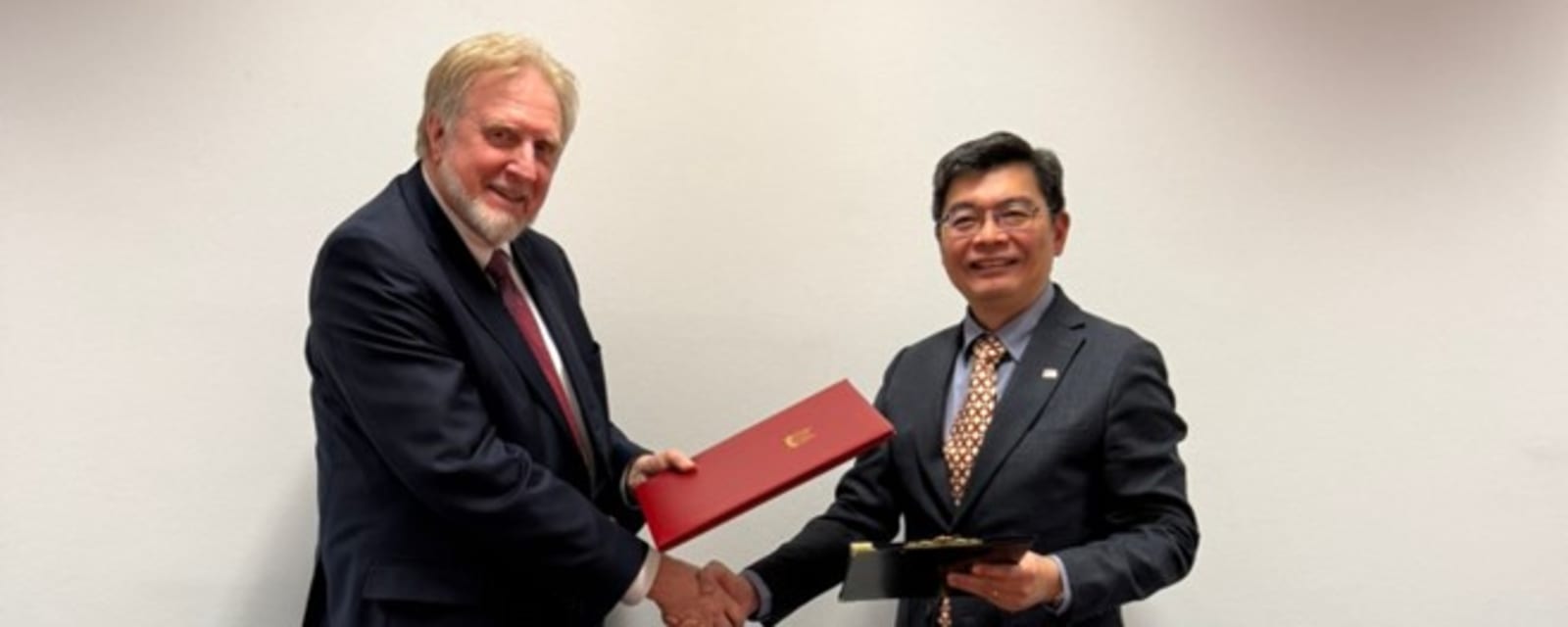
Singapore's National Environment Agency has formalized a strategic partnership with the United States Nuclear Regulatory Commission to accelerate the development of domestic nuclear safety capabilities. The Memorandum of Cooperation, signed on April 17, 2026, during the International Atomic Energy Agency's Convention on Nuclear Safety Review Meeting in Vienna, was executed by Ang Kok Kiat, Group Director of NEA's Radiation Protection and Nuclear Science Group, and David Skeen, Director of the US NRC's Office of International Programs.
The two-year training programme establishes a structured pathway for NEA personnel to develop advanced regulatory expertise through both classroom instruction and on-site attachments at the US NRC. Training focus areas include reactor regulation, safety assessments, probabilistic risk assessment methodologies, and inspection procedures—foundational competencies required to oversee nuclear facilities at international safety standards. This capability building directly supports NEA's Nuclear Safety Division, which was formally established in October 2025, indicating that Singapore is operationalizing its nuclear regulatory infrastructure in parallel with broader energy policy evaluation.
The agreement reflects Singapore's strategic energy positioning. With constrained access to renewable energy sources domestically, nuclear energy represents a viable low-carbon alternative aligned with the nation's net-zero commitments while addressing energy security concerns. Singapore has not yet committed to nuclear deployment but is conducting systematic feasibility assessments. In March 2026, NEA commissioned three independent studies examining international safety standards, environmental impacts of nuclear facilities, reactor design and operational safety protocols, and accident prevention mechanisms—a comprehensive regulatory foundation that complements the newly formalized training partnership with the US NRC.
This bilateral cooperation positions Singapore as a serious stakeholder in the global nuclear energy conversation, with regulatory capabilities and technical knowledge increasingly aligned with leading international standards. The timing and structure of the agreement suggest that decision-making on nuclear deployment could materialize within a defined timeframe as regulatory capacity and technical assessments converge.
Go deeper than the headline
Research every firm in this story, track the ones that matter and get the daily briefing — free for 7 days.