
Key Takeaways
- • China operates a state-backed venture capital and innovation system estimated at approximately $900 billion in scale, representing a comprehensive institutional framework for economic development that India has not yet replicated at comparable sovereign scale.
- • Educational investment disparity is stark: China allocates roughly $800 billion annually to education compared to India's approximately $12 billion, a critical gap that compounds human capital and innovation capacity differences between the two nations.
- • China leveraged WTO entry in 2001 under stringent conditions to build the world's most complete industrial supply chain, demonstrating how regulatory constraints can be converted into competitive advantage through sustained state-directed industrial policy.
- • When India imposed restrictions on Chinese electric vehicle imports, China responded by building a $1 billion manufacturing facility domestically within Indian borders, exemplifying rapid capital deployment and strategic adaptation to market access constraints.
- • China's innovation ecosystem now includes advanced capabilities in universities and domestic companies, marking a transition from manufacturing-dependent growth to technology-driven development that poses structural competitive challenges to India's current economic model.
Summary
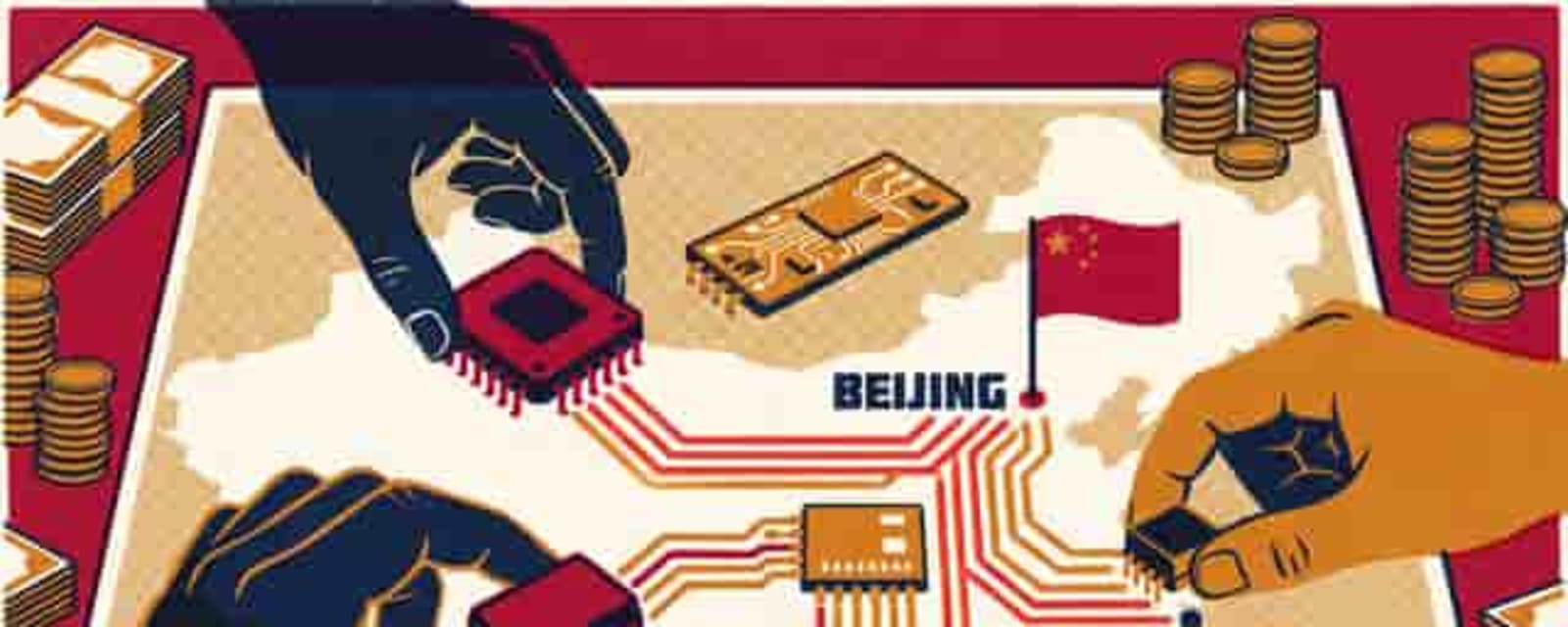
China has constructed an integrated state venture system valued at approximately $900 billion that functions as a comprehensive machine for economic development, innovation, and industrial scaling. This system operates across multiple layers—from sovereign-level capital allocation to university-based research commercialization to domestic manufacturing capacity—creating a coordinated ecosystem that sustains competitive advantage across sectors.
The educational investment gap between China and India underscores the foundational disparity driving long-term divergence. China's $800 billion annual education budget versus India's $12 billion expenditure creates a 67-fold gap in per-capita human capital investment. This difference translates directly into workforce quality, research output, and innovation capacity. As investor Vijay Kedia has highlighted, this metric crystallizes the scale differential between the two economies' commitment to capability-building infrastructure.
China's strategic response to trade friction demonstrates institutional agility. After India restricted Chinese EV imports, China deployed $1 billion to construct a manufacturing facility within India itself, converting a market access barrier into a localized production footprint. This pattern reflects how state-directed capital can rapidly redeploy to circumvent regulatory constraints while simultaneously building supply chain leverage within target markets. Similarly, when China entered the WTO in 2001 under terms more stringent than those negotiated by India, the country systematized learning and built the world's most vertically integrated industrial supply chain—transforming constraint into competitive moat.
China has transitioned from low-cost manufacturing into genuine innovation leadership. Universities and domestic companies now demonstrate advanced capabilities in emerging technologies, signaling a shift from factor-cost advantages to intellectual property and systems integration advantages. This evolution presents structural challenges to India's current positioning, which remains concentrated in services and lower-value manufacturing segments. Without comparable sovereign-scale venture infrastructure, educational investment, and supply chain integration, India faces deepening competitive disadvantage in capital-intensive, technology-driven sectors.
Go deeper than the headline
Research every firm in this story, track the ones that matter and get the daily briefing — free for 7 days.