
Key Takeaways
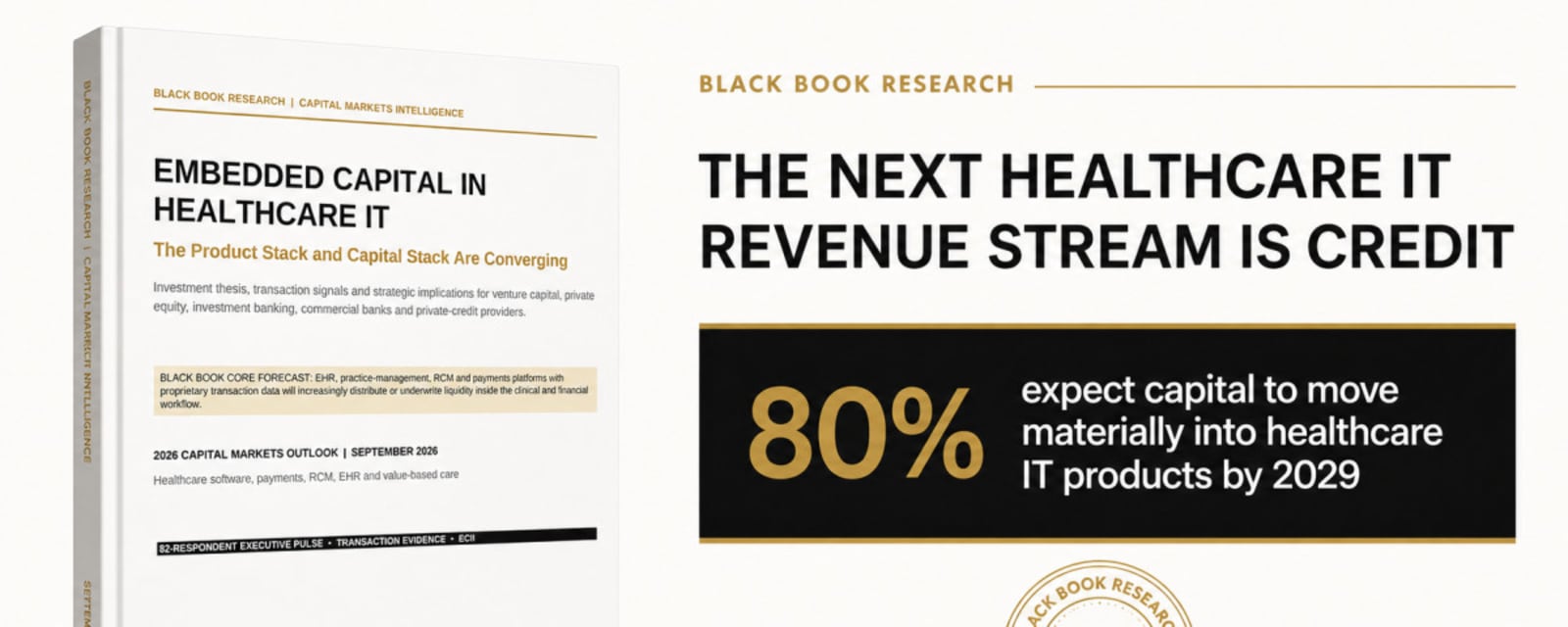
- • Black Book Research finds that embedded financing capacity is emerging as a core product differentiator in healthcare IT, with 80% of surveyed capital-markets professionals expecting material capital deployment into healthcare IT products by 2029.
- • Access to capital and the ability to embed financing into provider, patient, and reimbursement workflows is now a critical value driver alongside software functionality, fundamentally reshaping how healthcare IT vendors compete and are valued.
- • Among 82 healthcare investors, lenders, bankers, and IT executives surveyed, 77% believe claims and payment data will determine competitive battles among healthcare platforms, while 76% identify claims or reimbursement liquidity as an attractive embedded-capital application.
- • The convergence of product stacks and capital stacks signals that venture capital, private equity, and private-credit investors will increasingly need to evaluate which platforms can convert proprietary claims and payment workflow data into responsibly priced liquidity for providers and patients.
- • The quality, durability, and cost of capital are becoming integral components of the technology investment thesis and enterprise valuation for next-generation healthcare IT winners.
Summary
Healthcare software vendors face a fundamental shift in competitive positioning as access to capital emerges alongside technology functionality as a primary determinant of market success and enterprise value. A new vendor-agnostic study from Black Book Research, titled "Embedded Capital in Healthcare IT: The Product Stack and Capital Stack Are Converging," reveals that the ability to embed financing solutions into provider, patient, and reimbursement workflows is now a critical product differentiator and revenue stream for healthcare IT platforms.
The research, which surveyed 82 capital-markets professionals including venture capital firms, private equity investors, investment banks, commercial lenders, private-credit funds, and healthcare technology executives, demonstrates consensus around the strategic importance of embedded capital. According to Doug Brown, founder of Black Book, "The next generation of healthcare IT winners may not be determined by software functionality alone. When financing capacity becomes necessary to fulfill the product promise, the quality, durability and cost of capital become part of the technology investment thesis, and ultimately part of the valuation."
Three headline findings underscore this structural shift: 80% of respondents expect capital to move materially into healthcare IT products by 2029; 77% believe claims and payment data will help determine competitive outcomes among healthcare platforms; and 76% identify claims or reimbursement liquidity as an attractive embedded-capital application. This convergence indicates that investors evaluating healthcare IT opportunities must now assess both technology capabilities and the underlying capital infrastructure supporting provider and patient financing workflows.
The implications for investors and strategic buyers are substantial. Platform companies that successfully convert proprietary claims, payment, and workflow data into competitively priced liquidity will command higher valuations relative to technology-only competitors. This trend suggests increased M&A activity targeting healthcare IT platforms with embedded financing capabilities and expanded opportunities for private-credit providers to partner with or fund healthcare IT vendors building capital-intensive products.
Go deeper than the headline
Research every firm in this story, track the ones that matter and get the daily briefing — free for 7 days.