
Key Takeaways
- • Seed capital is the initial investment required to launch a startup or early-stage business venture, typically provided by founders, angel investors, friends, family, or early-stage venture capital firms in exchange for equity stakes.
- • Seed funding covers early-stage expenses including product development, market research, prototype creation, hiring key personnel, and operational setup—critical activities that validate market demand before larger funding rounds.
- • Investors evaluate seed-stage opportunities based on three factors: a compelling narrative, a capable founding team with proven ability to execute, and demonstrated market traction (such as 10% weekly user growth over multiple weeks).
- • Seed capital investors assume elevated risk in exchange for potential high returns and equity ownership; entrepreneurs negotiate ownership percentages and return terms directly with investors, requiring founders to surrender a portion of company ownership.
- • Seed funding serves as a prerequisite to venture capital and Series A financing, allowing founders to prove product-market fit and customer adoption before approaching institutional venture investors for substantially larger capital rounds.
Summary
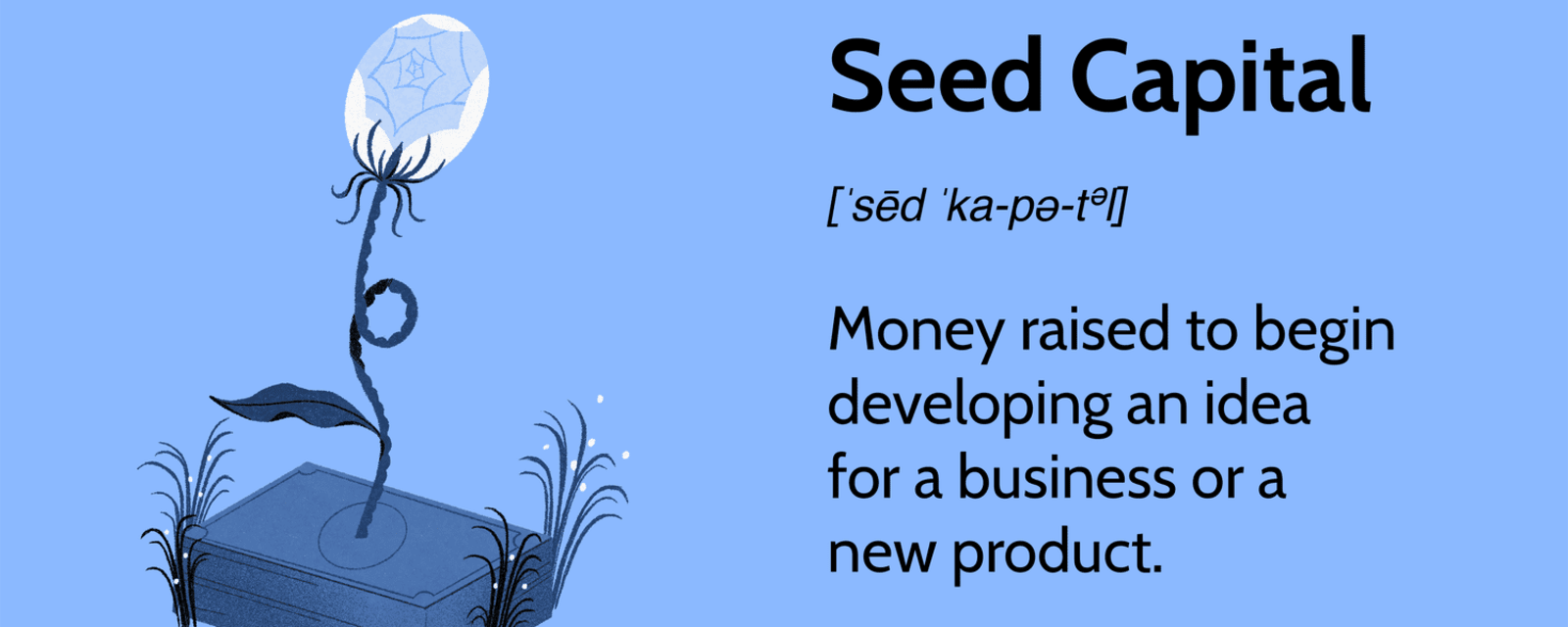
Seed capital, also known as seed funding or seed money, represents the foundational financial injection that transforms startup concepts into viable business operations. This initial investment is typically the first formal capital a company receives during its earliest development stages and is essential for entrepreneurs to move from ideation to tangible product execution. The funding is commonly sourced from personal networks and early institutional investors, including angel investors, friends and family members, and seed-stage venture capital firms willing to accept elevated risk profiles in pursuit of outsized returns.
The deployment of seed capital addresses a distinct set of early-stage business requirements. According to multiple authoritative sources, seed funding covers critical expenses including product development and prototyping, market research and validation activities, hiring of key personnel, operational infrastructure setup, and business plan development. The amount required varies substantially based on business model and industry, but the primary objective remains constant: providing sufficient runway to test market demand, build working prototypes, and achieve initial customer traction before seeking larger institutional funding.
The investment decision process for seed-stage capital involves three core considerations, according to Y Combinator's framework. Investors evaluate the strength of the founders' narrative and vision, the capability and execution history of the founding team itself, and tangible market validation metrics. Notably, investors increasingly demand evidence of product-market fit and customer adoption rates—with growth benchmarks such as 10% weekly user acquisition sustained over multiple weeks considered indicative of compelling opportunities. This emphasis on traction reflects the high-failure risk inherent in seed-stage investments and investors' need for de-risking signals before capital deployment.
The equity exchange structure defines seed capital arrangements. In return for their investment, seed-stage investors receive ownership stakes in the company, with ownership percentages and return terms negotiated directly between entrepreneurs and investors. Critically, founders are not required to repay seed capital as debt; instead, investor returns derive from the future success and eventual exit of the business. This equity-based structure means entrepreneurs must consciously accept ownership dilution as the trade-off for securing the financial resources necessary to reach subsequent funding milestones such as Series A rounds.
Seed funding functions as a prerequisite stepping stone within the broader venture financing ecosystem. By enabling founders to validate their market opportunity, demonstrate customer demand, and establish product viability, seed capital positions early-stage companies to credibly approach institutional venture capital investors for substantially larger funding rounds. The competitive advantage provided by seed capital extends across hiring, marketing, public relations, and sales initiatives—making access to this initial funding a decisive factor in startup execution and market competitiveness.
Go deeper than the headline
Research every firm in this story, track the ones that matter and get the daily briefing — free for 7 days.