
Key Takeaways
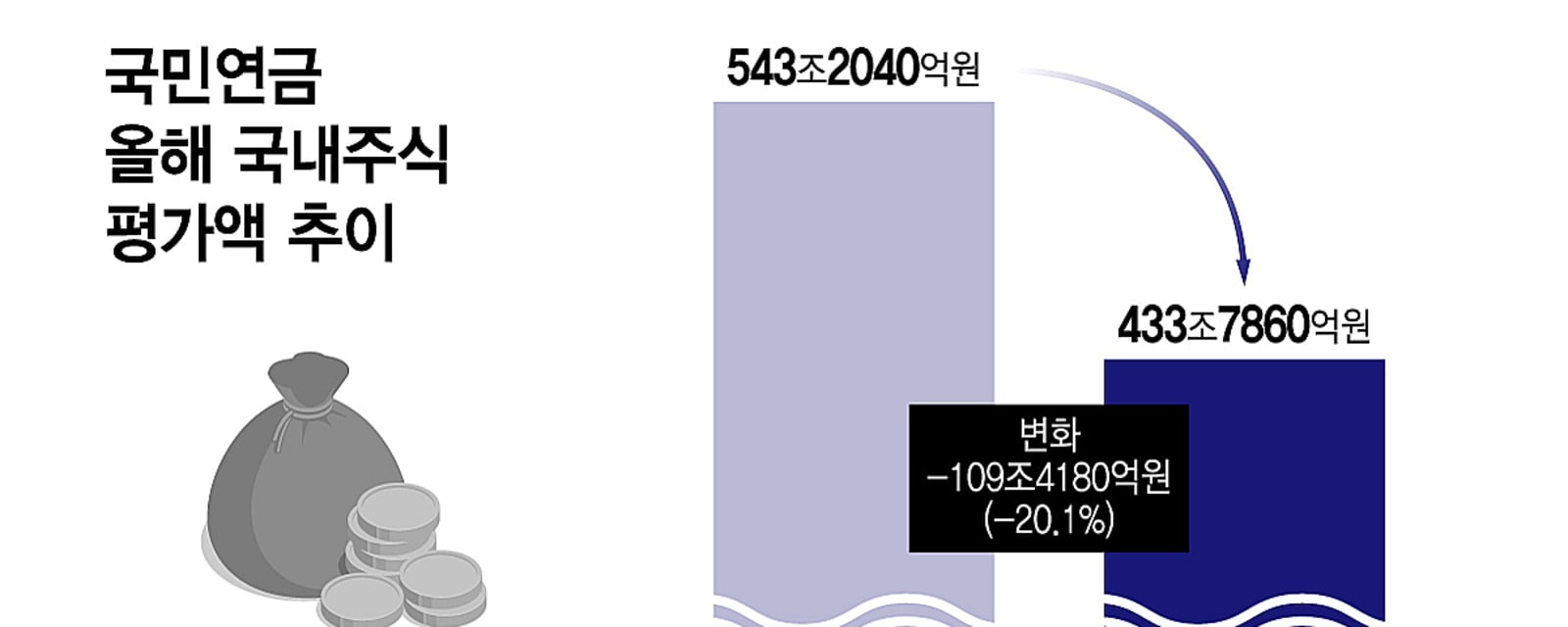
- • The National Pension Service's domestic equity valuation fell by more than 240 trillion won in the second half of the year, dropping below the 300 trillion won mark by an estimate based on the KOSPI's November 23 intraday low.
- • Using the end-of-June and end-of-August disclosures, the NPS's domestic equity holdings were estimated at 296 trillion 153.5 billion won, a decline of 247 trillion 50.5 billion won from the end of June.
- • The NPS's 2026 domestic equity return of 65.86% through August closely tracked the KOSPI-based return of 63.54%, according to the fund's disclosures.
- • The NPS said its first-half suspension of rebalancing reduced losses, and that a simulation assuming sales without the suspension would have produced worse results.
- • Chairman Kim Seong-ju said the fund would have had to sell more than 800 billion won of stocks daily under the original rules, and the NPS cited limited alternative investment options.
Summary
The National Pension Service (NPS) has seen its domestic equity valuation fall by more than 240 trillion won in the second half of the year, pushing the portfolio below the 300 trillion won level, according to a report from MoneyToday (머니투데이). The decline coincides with a sharp sell-off in AI-related stocks, which the report compares to the collapse of the dot-com bubble.
The estimate is based on a calculation that substitutes the NPS's latest public disclosure, a domestic equity valuation of 433 trillion 786 billion won at the end of August, and the KOSPI closing price at that time of 6,820.02, with the KOSPI's intraday low of 4,656.15 on November 23. On that basis, the current domestic equity valuation is about 296 trillion 153.5 billion won, a drop of 247 trillion 50.5 billion won from the end-of-June disclosure. The figure is an estimate rather than an official valuation.
The NPS uses the KOSPI as a performance benchmark in its internal guidelines. Through the end of August, its domestic equity return for the year was 65.86%, against 63.54% for the KOSPI including dividends, indicating that the fund's holdings have largely moved in line with the index. The NPS suspended domestic equity rebalancing from January through June and resumed it on July 1. According to the report, changes in domestic equity valuation from July to August were similar to the movement in returns, suggesting the fund did not make significant reductions through sales after resuming rebalancing.
The NPS has defended the suspension. An official said that a simulation assuming sales without the suspension would have yielded worse results. Chairman Kim Seong-ju told the National Assembly audit last month that following the original rules would have required selling more than 800 billion won of stocks daily, and said that holding positions was more beneficial for returns when markets change rapidly. The NPS also argued there were no suitable alternatives: Kim cited domestic bond declines of 3% and overseas equity returns of about 10%, and the fund's alternative investment return for the year through August was 0.29%.
The report also cites a Wall Street Journal column by James Mackintosh, published November 22 (local time) under the headline "Has the AI Bubble Already Burst?", which argued that the recent AI sell-off resembles the dot-com collapse. Mackintosh described the Korean market as a "mini-bubble" in which memory semiconductor stocks surged and fell after absorbing money from leveraged retail investors.
Go deeper than the headline
Research every firm in this story, track the ones that matter and get the daily briefing — free for 7 days.