
Key Takeaways
- • Northland College in Ashland, Wisconsin borrowed $22 million from its restricted endowment fund between February 2015 and June 2024 to cover operations and cash shortfalls, according to the college's own later reporting, leaving only $3.3 million of donor-restricted funds before the 2025 closure.
- • An Ashland County judge approved a modified version of Northland's petition to release donor restrictions and distribute remaining funds to nonprofits, finding the board complied with state law, after the Wisconsin Attorney General's office took no position.
- • Donor Brett Norgaard and the Mead Witter Foundation contend the borrowing violated Wisconsin's Uniform Prudent Management of Institutional Funds Act (UPMIFA) and that the college never provided a full accounting or written donor consent.
- • A 2024 Wipfli auditor's report found Northland lacked staff trained in GAAP as of June 2023 and had staffing gaps that prevented proper segregation of duties.
- • The Burke Center for Freshwater Innovation, which had a $10 million endowment set aside in 2015, is among the most affected beneficiaries of the borrowing.
Summary
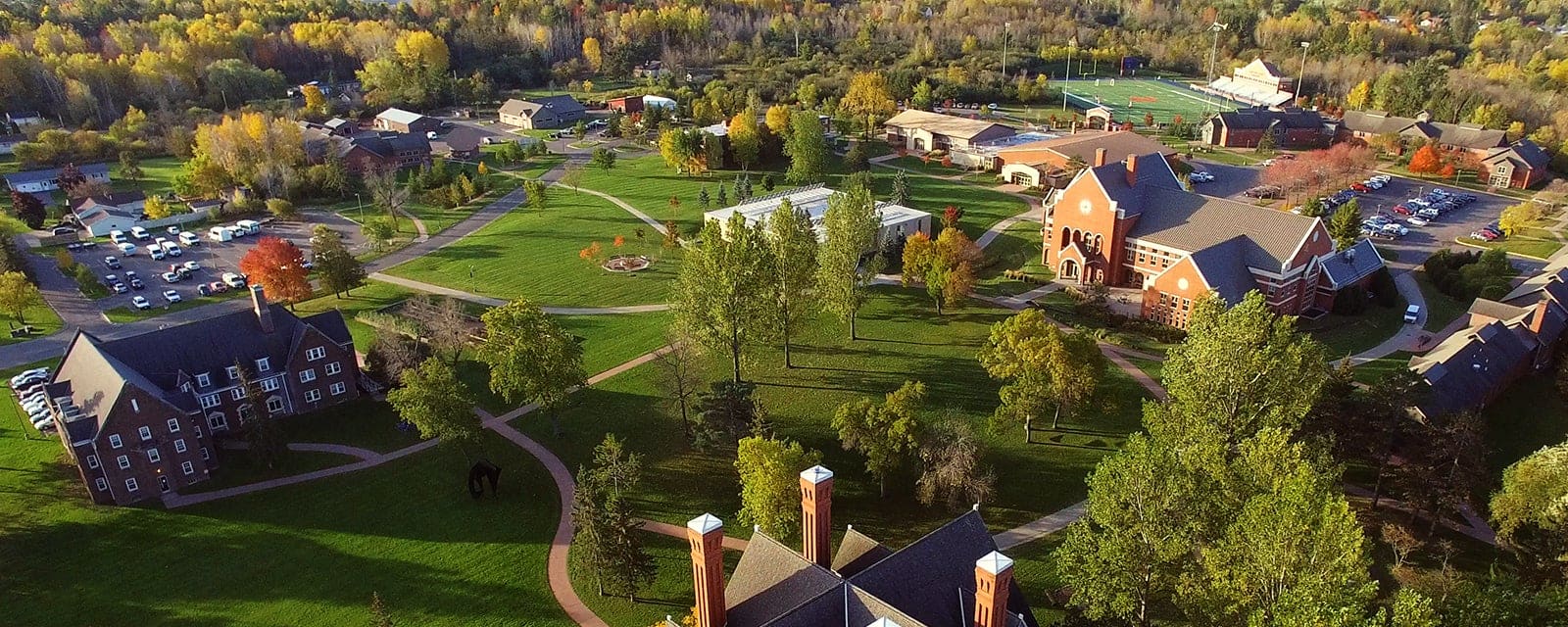
Northland College, a small liberal arts college in Ashland, Wisconsin, closed in 2025 after years of enrollment declines and financial struggles. Earlier in 2026, the board of trustees disclosed that it had borrowed $22 million from its restricted endowment fund to cover operations and cash flow shortages. Only $3.3 million of donor-restricted funds now remain. In February, the college petitioned Ashland County Circuit Court to release restrictions on those funds and approve a plan to distribute the remainder to nonprofits, institutions and foundations. On July 16, the court approved a modified version of the proposal, with a judge finding the board complied with state law.
The ruling has drawn sharp dispute from donors. Brett Norgaard, whose family created the Brother Bear Endowment Fund and a scholarship in honor of his son Bjorn, said family and friends donated at least $156,000 across the two funds, most of which is now gone. He says he never gave written consent to change spending restrictions and that Northland has never provided a full accounting despite repeated requests. He has asked the Wisconsin attorney general's office to re-examine the college's figures. The Mead Witter Foundation, represented by Erin Deeley of Stafford Rosenbaum, has raised concerns about inconsistencies in Northland's reporting, noting that regular updates through June 2023 described its $1.4 million endowment as intact, and that statements showed roughly $7 million borrowed between 2015 and 2019. The foundation said irregularities "strongly suggest" the college violated the law.
Northland's counsel, Courtney Schultz of Saul Ewing, told the court on May 8 that UPMIFA permits inter-fund loaning when an institution conducts the required prudence analysis. She said the college made such loans from 2012 to 2019 after such analysis, and that in 2012 a court order eliminated restrictions on funds with insufficient records while more than two dozen donors authorized use of restricted funds for debt repayment. Board chair Ted Bristol said the petition aimed to distribute funds "in a reasonable, fair and thoughtful manner that most closely aligns with donor intent." Ben Orzeske of the Uniform Law Commission said the law does not expressly bar institutional self-loans but that such a structure would be difficult to justify as prudent. Susan Gary, who drafted revisions to UPMIFA, said the prudence determination rested with the board and that any challenge would come from the attorney general. Assistant Attorney General Michael Morris told the court the office found no clear violations, acknowledging a $19 million shortfall and unpaid creditors, and took no position on the petition.
The distribution plan produced winners and losers. The court required Northland to pay the full roughly $90,000 Becky Rom Wilderness Advocacy Scholarship, which was created in 2023 after the borrowing began, reversing a reduction to about $13,000. The Sigurd Olson Environmental Institute is set to receive around $900,000, though that amount is lower than before. The Burke Center for Freshwater Innovation, whose $10 million endowment was set aside in 2015, was the most heavily affected fund, according to its attorney, Jonathan Ingrisano of Godfrey & Kahn.
Go deeper than the headline
Research every firm in this story, track the ones that matter and get the daily briefing — free for 7 days.