
Key Takeaways
- • South Korea's government will require all workplaces to externally fund retirement benefits, phased in by company size: 100 or more employees from January 2028, 10 to 99 employees from January 2029, and fewer than 10 employees from January 2030.
- • A new "fund-based retirement pension" will let professional trustee corporations manage DC and IRP assets, with three operator types: financial institution open type, labor-management consortium type, and public institution open type.
- • Under the proposal, trustee corporations would bear the burden of proof in damages claims for losses from investment management, conflict-of-interest or disclosure breaches, and must prove they acted without intent or negligence.
- • Trustees must set aside 0.25% of funds as an operational risk reserve, including to compensate participants for losses.
- • The government aims to pass the enabling bill through the National Assembly within 2026, and will also ease the 70% cap on risk-asset investment in IRP funds.
Summary
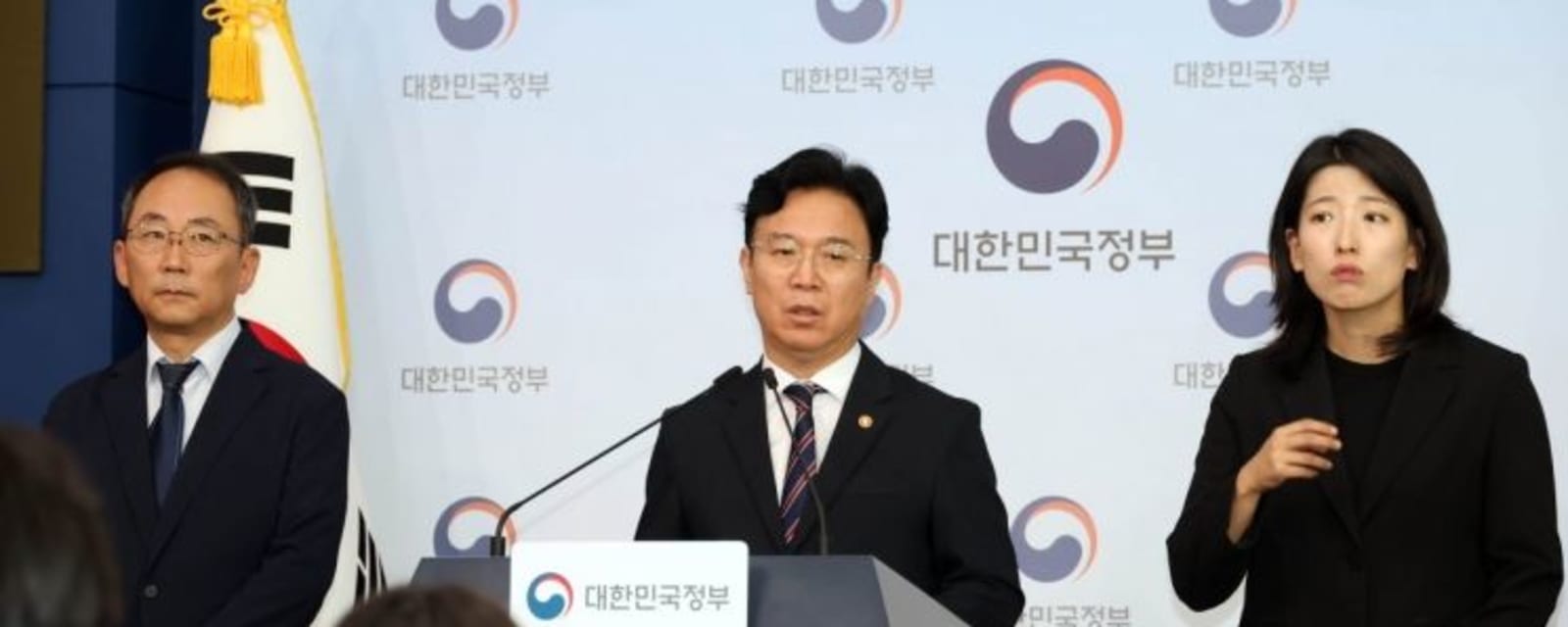
The Ministry of Employment and Labor and relevant ministries announced the "Measures to Strengthen the Functions of Retirement Pensions" on October 29, 2026, following consultations between the government and the ruling party at the Climate, Energy, Environment and Labor Committee, according to Asia Business Daily. The plan makes external funding of retirement benefits mandatory at all workplaces, phased in over three stages tied to revisions to the Guarantee of Workers' Retirement Benefits Act expected within this year, followed by a one-year preparation period.
Under the new "fund-based retirement pension" framework, professional trustee corporations would manage participant funds to improve returns. The system would initially cover defined contribution (DC) and individual retirement pension (IRP) plans and include three operator types: an open type run by financial institutions (for-profit), a consortium type run by labor-management groups (nonprofit), and a public institution open type that includes the SME Retirement Pension Fund. To address information asymmetry and principal-agent risk, the burden of proof in damages claims arising from breaches of investment management, conflict-of-interest or disclosure obligations would shift to the trustee, which would have to demonstrate it acted without intent or negligence. Trustees would also be required to set aside 0.25% of funds as an operational risk reserve.
To ease the burden on small businesses, the government will provide KRW 6 billion in matching contributions for workplaces with fewer than 30 employees that adopt the system early, and KRW 6.2 billion in interest subsidies equivalent to 2 percentage points on business loans for workplaces with fewer than 50 employees. Workplaces that have not established a plan will be automatically enrolled in the Small and Medium-sized Enterprise Retirement Pension Fund (Pureun Seed), according to Nam Seonguk, director of the Retirement Pension and Welfare Division at the Labor Policy Office.
Additional measures under consideration include an opt-out system under which retirement benefits are paid as a pension unless recipients elect a lump sum, and collateralized loans to reduce early withdrawals for housing costs. The government also plans to gradually relax the 70% limit on IRP funds invested in risk assets, add integrated investment accounts (IMAs) and commercial paper to DC and IRP investment options, and move default-option advance notice from four weeks after maturity to two weeks before maturity. Whether the National Pension Service will directly participate in fund management remains under discussion, as the government, labor and management hold differing views. Minister of Employment and Labor Kim Younghoon said the government will work to pass the bill within the year, noting retirement pension assets have exceeded KRW 500 trillion.
Go deeper than the headline
Research every firm in this story, track the ones that matter and get the daily briefing — free for 7 days.