
Key Takeaways
- • Top1000funds.com's coverage from the FIS 2026 event at Harvard University centers on impact investing and whether the approach can scale beyond niche products.
- • The primary excerpt identifies two obstacles to scale: a lack of investable products and insufficient evidence of outcomes.
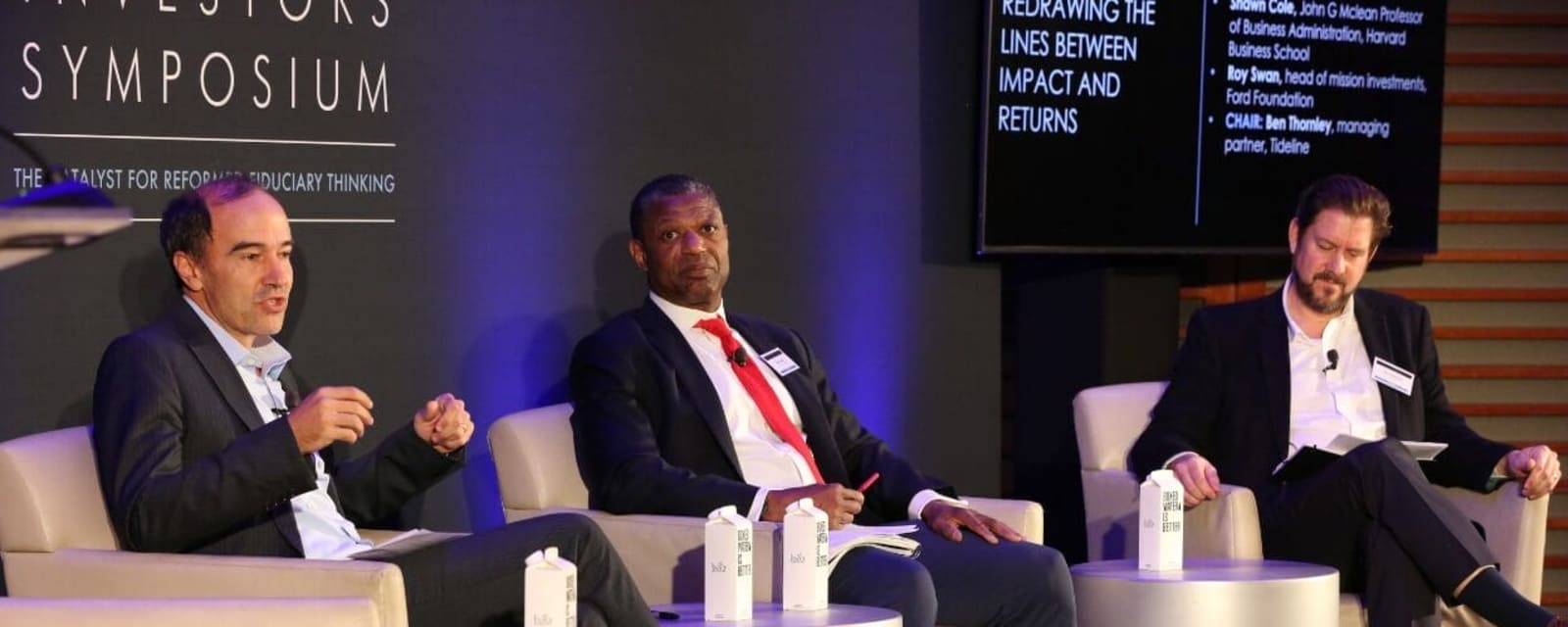
- • Photo caption identifies Shawn Cole, Roy Swan and Ben Thornley as the session participants.
- • Related coverage on the same platform addresses responsible investing, private equity return measurement, and private credit redemptions, reflecting broader institutional debate on sustainability-focused allocation.
Summary
A report on Top1000funds.com from the FIS 2026 conference at Harvard University examines the prospects for scaling impact investing. The available excerpt of the article is limited to its opening framing, which identifies a shortage of impact investment products and insufficient evidence of measurable outcomes as the principal constraints on growth. The photo caption names Shawn Cole, Roy Swan and Ben Thornley as participants in the session. The full article text is not available in the source material, so further detail on specific figures, fund examples or panel conclusions cannot be confirmed.
The platform's surrounding coverage provides context on the institutional investment landscape. The Massachusetts PRIM chair and state Treasurer Deborah Goldberg described responsible investing as "common sense" for the $116 billion fund, while noting it has become harder to obtain certain ESG-related information from managers and companies. This points to data availability as a recurring theme for sustainability-focused allocators.
Other related stories on the site cover adjacent themes. Chief investment officers, according to Top1000funds.com, are seeking portfolios resilient across macroeconomic regimes. Coverage of Blue Owl Capital's private credit redemption pressure and the public-equity critique of private equity return measurement reflects a broader scrutiny of manager transparency and performance claims that bears on how impact strategies are evaluated.
Go deeper than the headline
Research every firm in this story, track the ones that matter and get the daily briefing — free for 7 days.