
Key Takeaways
- • The Public Investment Corporation (PIC), managing Government Employees Pension Fund (GEPF) money, lost roughly R22 billion in the Steinhoff collapse, according to the IOL column, with no meaningful recovery.
- • Steinhoff's December 2017 collapse wiped out approximately R200 billion in market capitalization for South African investors on the JSE, tied to a €6.5 billion web of fictitious transactions dating back to 2009.
- • The PIC's exposure ran through a direct holding of roughly 10% of Steinhoff's shares and debt (an estimated R16 billion loss) and a R9.35 billion 'Project Sierra' investment in Lancaster 101 executed in 2016.
- • Former chairman Dr Christo Wiese and Audit and Risk Committee chair Dr Steve Booysen have not faced personal legal accountability, according to the column, which questions why non-executive directors were never held to account.
- • Former CEO Markus Jooste died in March 2024 a day before he was due to face Hawks fraud charges, and his estate was placed into provisional sequestration in August 2026.
Summary
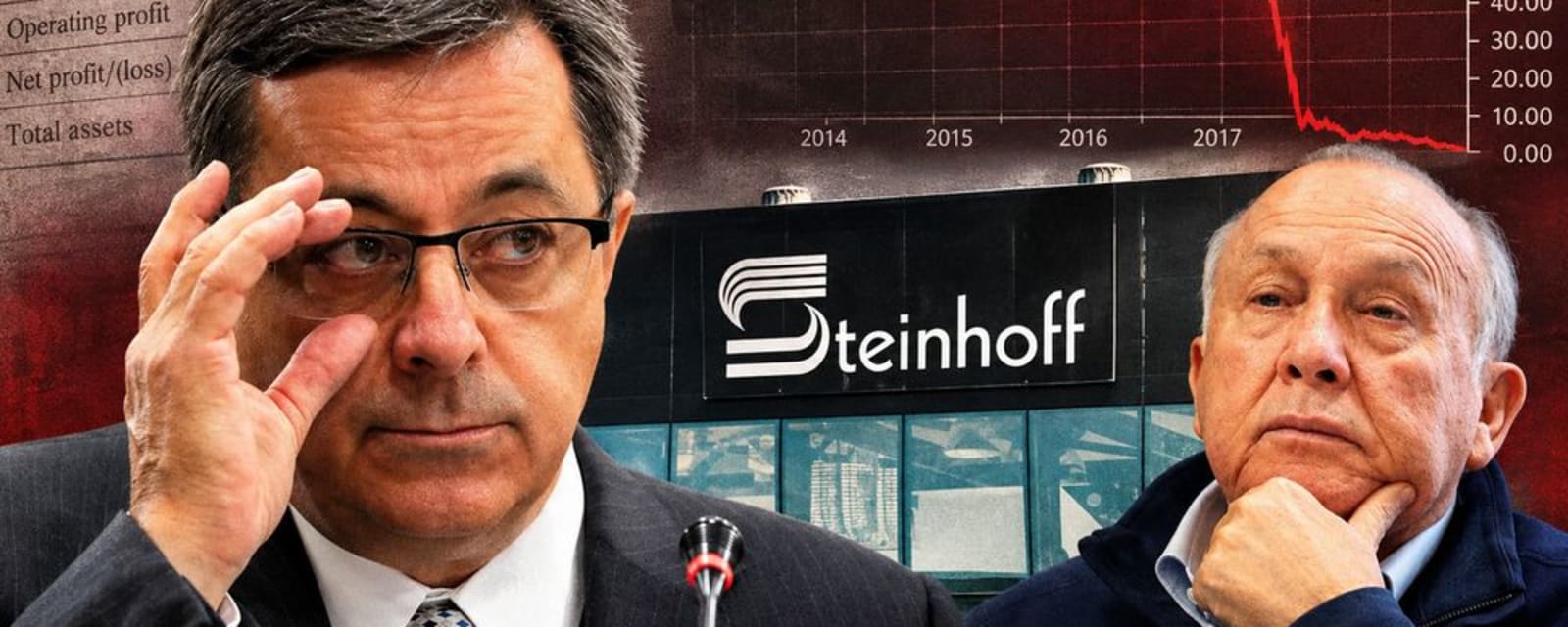
Nine years after the collapse of Steinhoff International, an IOL column by Adri Senekal de Wet revisits what it describes as South Africa's largest reported corporate fraud and accounting scandal. Steinhoff officially collapsed in December 2017, wiping out approximately R200 billion in market capitalization for South African investors on the Johannesburg Stock Exchange and exposing a €6.5 billion web of fictitious transactions stretching back to 2009. The company has since been delisted, liquidated and its debt restructured, with its assets sold off.
The column places the heaviest burden on public pension savers. The PIC, which manages civil servants' retirement savings through the GEPF, lost roughly R22 billion, which the column equates to a full year's salary for more than 55,000 nurses or 65,000 public school teachers. The PIC's exposure ran through two channels. The first was a direct holding of roughly 10% of Steinhoff's listed shares and debt, which the column estimates produced losses of about R16 billion when the stock fell more than 90% in December 2017. The second was a R9.35 billion investment in August 2016, branded internally as 'Project Sierra' and disclosed through a Steinhoff SENS notice on 26 September 2016, which funnelled nearly R10 billion into Lancaster 101, an empowerment vehicle linked to former trade unionist Jayendra Naidoo. Naidoo's Lancaster Group reportedly received a R114 million underwriting commission and another R100 million in advisory and transaction fees.
The column questions the governance oversight surrounding the company. Dr Christo Wiese, who merged his retail empire into Steinhoff in 2014 and became its largest shareholder and Chairman of the Supervisory Board, said he had been blindsided by a small group of executives. Dr Steve Booysen, who chaired the Audit and Risk Committee, and Dr Johan van Zyl, who joined the board in May 2016, were also on the board. Deloitte raised red flags in late 2017 over a 'lack of economic substance' before refusing to sign off on the accounts. The column argues that none of the non-executive directors were personally sued or criminally held to account, while several of them continued successful careers.
The column also highlights the unresolved case against Markus Jooste. The South African Reserve Bank seized assets linked to him, but he was not prosecuted for more than six years. On 21 March 2024, authorities reported that he died by a self-inflicted gunshot wound at his home in Voëlklip, Hermanus, one day before he was due to hand himself over to the Hawks. The column notes the absence of a public funeral and a released pathology report. In August 2026, the Western Cape High Court placed his deceased estate into provisional sequestration, as creditors and regulators continue to pursue remaining assets.
Go deeper than the headline
Research every firm in this story, track the ones that matter and get the daily briefing.