
Key Takeaways
- • Australian freight operators face a critical infrastructure decision: without government backing for green rail alternatives, the industry will reinvest in new diesel locomotives, locking in carbon-intensive transport for decades and undermining national decarbonization targets.
- • Rail freight currently generates up to 16 times fewer emissions than trucking and is nearly as clean as domestic shipping, but this competitive sustainability advantage is eroding as the sector loses market share to road transport due to government underinvestment and high track access fees.
- • The Australasian Railway Association (ARA) launched a GHD-authored report highlighting systemic planning failures in rail infrastructure governance, warning that without coordinated decarbonization action, the sector risks further marginalization against trucking while Australia's emissions commitments suffer.
- • Rail freight accounts for only a fraction of transportation emissions globally (1.8% of U.S. transportation-related GHG emissions despite handling 40% of long-distance freight ton-miles), yet its shrinking modal share means aggregate transport emissions rise as cargo shifts to less efficient modes.
Summary
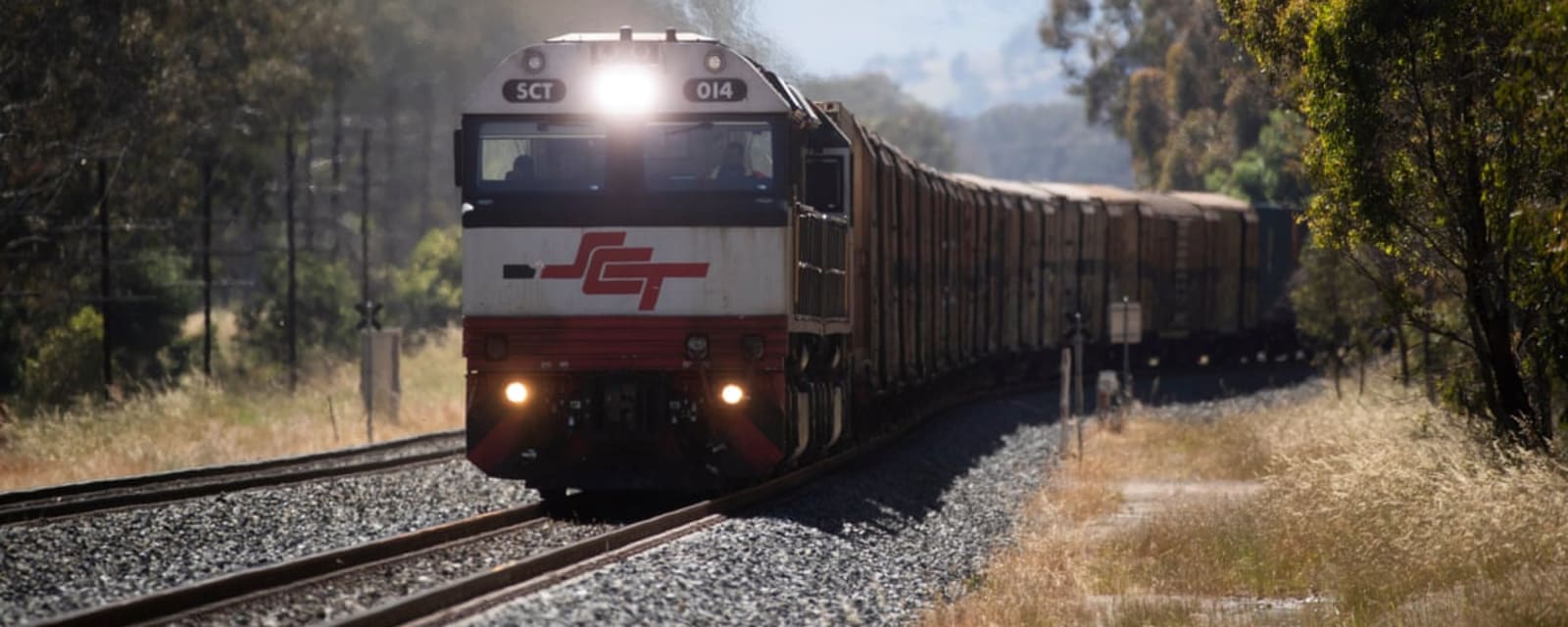
Australia's rail freight industry stands at a critical juncture as operators face an infrastructure investment decision with profound decarbonization implications. The Australasian Railway Association (ARA) released a report developed by engineering consultancy GHD highlighting that freight operators will likely purchase new diesel locomotives if governments fail to commit to green rail alternatives. This dynamic creates a perverse outcome: capital deployed into diesel-powered rolling stock today will lock in carbon-intensive freight transport for the operational lifetime of those assets, potentially decades, directly conflicting with Australia's climate commitments.
The sustainability case for rail freight is compelling. Transporting cargo by rail currently generates up to 16 times fewer emissions than trucking and is only marginally less clean than domestic shipping. Despite this environmental advantage, the sector has lost significant market share to trucking in recent decades, a shift driven by government underinvestment in regional rail infrastructure and comparatively high track access fees. The GHD report identifies a fundamental gap in infrastructure planning and governance, with the report citing "a lack of planning from those in charge of rail infrastructure" as a critical factor limiting decarbonization pathways. The report warns that without decisive action from industry and government, rail freight could lose further competitive ground to road transport, ultimately working against Australia's emissions reduction targets.
The competitive dynamics favoring trucking extend beyond environmental considerations. B-double trucks offer more direct delivery routes and operational flexibility, while rail freight typically suffers from slower transit times that can be exacerbated by track damage from flooding. These operational constraints, combined with structural cost disadvantages tied to infrastructure fees, have made trucking increasingly attractive despite its substantially higher carbon footprint. The sector argues that road freight pricing fails to reflect the true cost of infrastructure damage and health impacts, creating market conditions that artificially disadvantage cleaner transport modes.
The timing of this infrastructure investment cycle is consequential. Diesel locomotive purchases made in the near term will establish carbon lock-in for 20-30 years or more, during a critical decade for global decarbonization efforts. The ARA report underscores that coordinated government action on electrification, hydrogen, battery-electric, or other green alternatives is essential to prevent the industry from defaulting to diesel reinvestment as operators seek reliable, proven technology for capital-intensive fleet renewals.
Go deeper than the headline
Research every firm in this story, track the ones that matter and get the daily briefing — free for 7 days.