
Key Takeaways
- • Macquarie Asset Management head Karl Kuchel said about 90% of U.S. infrastructure investment opportunities are focused on digital and energy, with AI-driven data center demand driving the cycle.
- • PAG projects global data center developer facility investment will reach $7.4 trillion between 2026 and 2030, up from less than $200 billion a year in 2022, per PAG head of global infrastructure Charlie Reid.
- • Macquarie reports U.S. utilities forecast 2030 peak electricity demand growth of 166 GW, six times the 2022 forecast, with data centers accounting for about 54%.
- • PAG CEO Reed warned of overheating, citing developers contracting land and capacity without securing power, water, and community support, and said PAG is favoring stable operating assets over new construction.
- • Korea's renewable energy market could open more than $400 billion in investment opportunities by 2050, with Korea's renewable share (currently 9%) far below the OECD average of 35%.
Summary
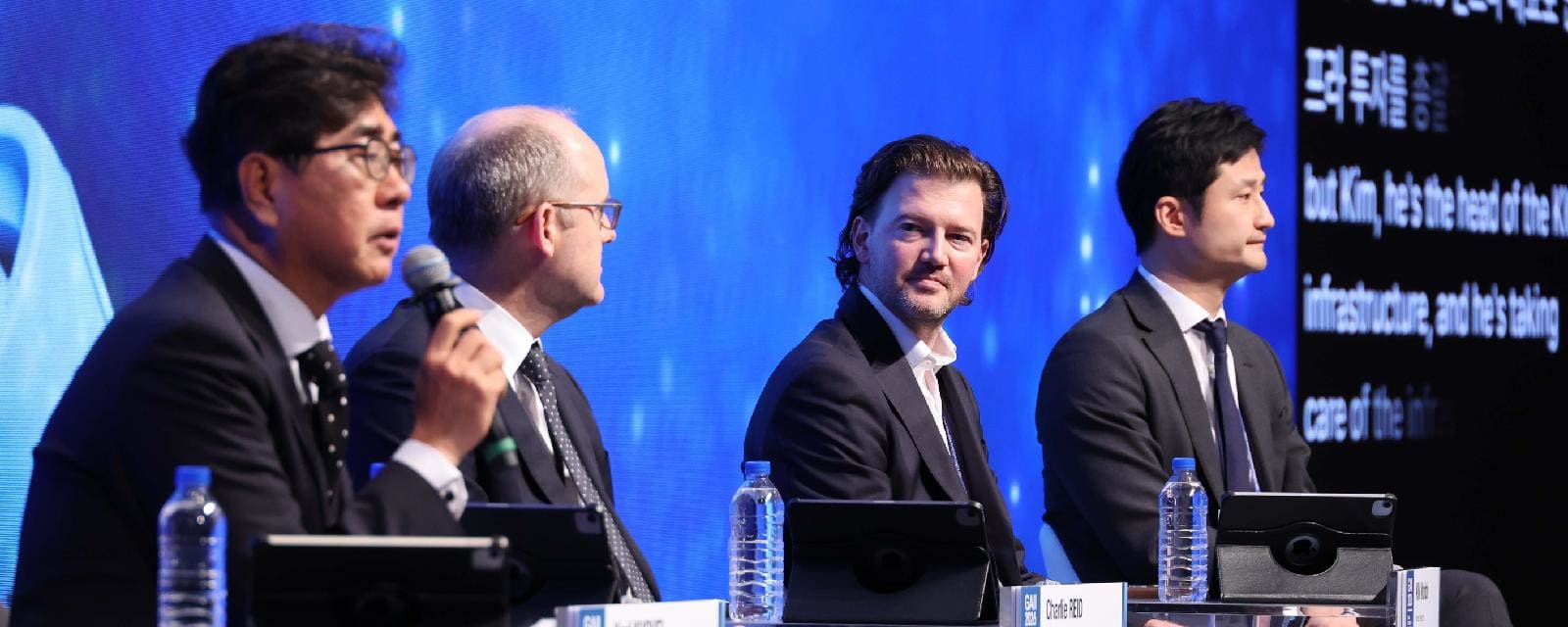
Speaking at the Global Alternative Investment Conference (GAII) 2026 infrastructure session in Seoul on November 19, Karl Kuchel, head of Macquarie Asset Management, described a capital investment cycle in global infrastructure driven by artificial intelligence data centers. Kuchel said about 90% of U.S. infrastructure investment opportunities are focused on digital and energy, and noted that computing capacity contract prices have risen significantly from a year or two earlier. He said global infrastructure transactions are at an all-time high, with many increases coming from greenfield construction.
Charlie Reid, head of PAG's global infrastructure, said global data center infrastructure investment has risen by more than $1 trillion this year from under $200 billion a year in 2022. PAG forecasts that facility investment by global data center developers will reach $7.4 trillion between 2026 and 2030. Big Tech's facility investment reached 152% of its free cash flow last year.
According to Macquarie, U.S. utilities forecast peak electricity demand growth of 166 GW in 2030, six times their 2022 forecast, with data centers accounting for about 54%. Electrification across the economy is also adding to power demand. Kuchel said solar and battery investment remains strong despite the shift in U.S. energy policy from the Biden administration's decarbonization agenda to the Trump administration's "energy dominance" approach, citing low costs and fast supply.
The session also highlighted constraints. Power availability is tight in key U.S. markets, prompting data centers to relocate to areas with available power, and some key components have taken more than two years to deliver. Analysts said the perception that AI benefits are not sufficiently returned to local communities has fueled backlash ahead of the midterm elections.
PAG CEO Reed cautioned that some developers are overheating the market by contracting land and capacity without securing power, water, and community support. PAG is acquiring stable operating assets rather than new construction, citing construction costs for Tokyo data centers rising 50% over five years and up to seven years needed to secure electricity. Kuchel said that as capital becomes a key constraint, investors can demand more favorable terms and governance, and should select reliable partners when paying multiples above construction costs.
For Korea, PAG projects renewable generation share will rise to 63% by 2050, with more than 290 GW of facilities and a market exceeding $400 billion. Reed said reaching the 2030 goal of more than 100GW would require about $100 billion over the next few years. Kim Won-bin, head of the Korea Investment Corporation's infrastructure investment office, said KIC continues to increase its AI infrastructure exposure, focusing on assets with long-term contracts and strong counterparties. Park Hee-joon, CEO of EIP Asset Management, which hosted the event, called for steady investment by domestic institutions.
Go deeper than the headline
Research every firm in this story, track the ones that matter and get the daily briefing — free for 7 days.