
Key Takeaways
- • BNY CEO Robin Vince characterized tokenization as "a megatrend," signaling that major institutional custodians are preparing infrastructure for on-chain asset settlement as a structural market shift.
- • The tokenization market represents a $16 trillion opportunity, with projections suggesting real-world asset (RWA) tokenization could exceed $10 trillion in market value by 2030.
- • Leading financial institutions—including JP Morgan, Goldman Sachs, Barclays, and the DTCC—are actively backing tokenization infrastructure, with Barclays taking a stake in Ubyx, a stablecoin clearing and settlement platform.
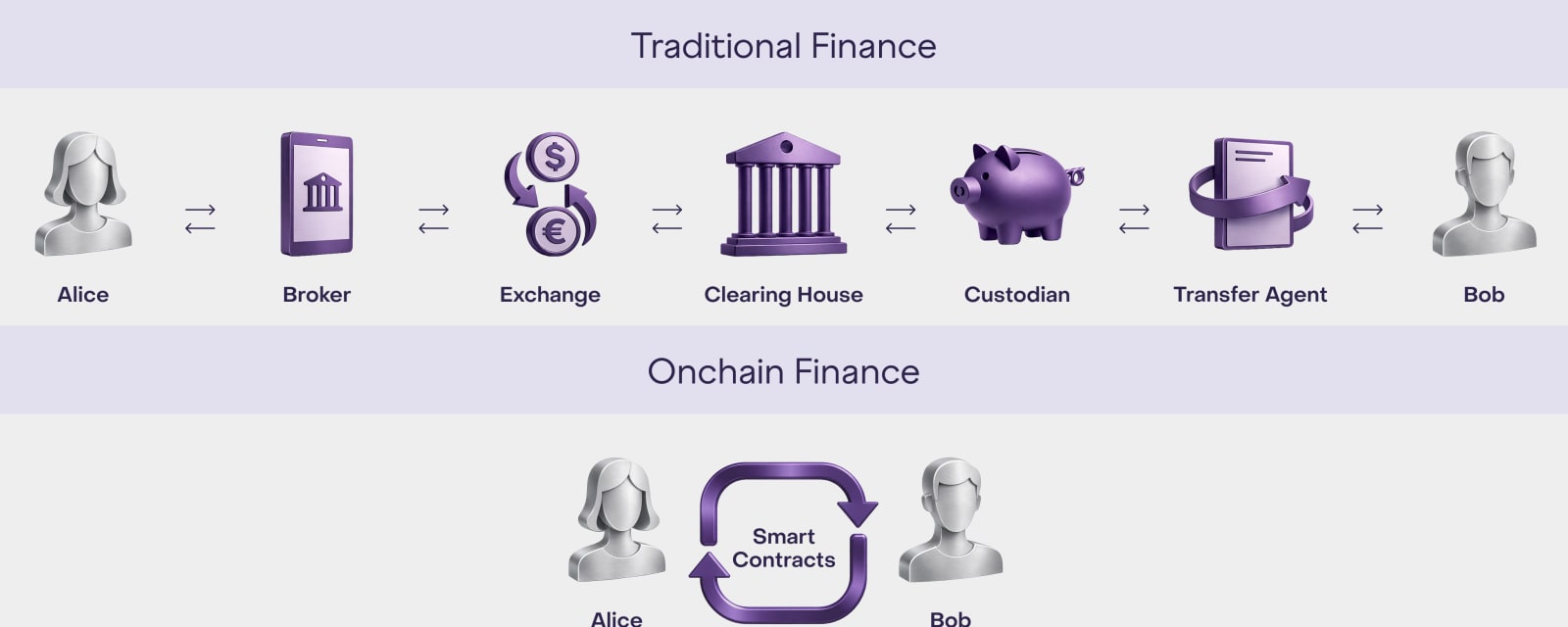
- • Tokenization eliminates intermediaries, reduces transaction costs, accelerates settlement (from two days to instant), and enables 24/7 global trading with enhanced liquidity and transparency across equities, bonds, real estate, and alternative assets.
- • Ethereum and Solana are emerging as leading blockchains in the tokenized economy, while a separate $6 billion network backed by major institutions is processing volume exceeding both platforms combined, according to institutional crypto research.
Summary
Tokenization—the process of creating digital representations of real-world assets on blockchain infrastructure—has transitioned from theoretical fintech concept to institutional investment priority. BNY Mellon's CEO Robin Vince recently declared it a "megatrend" during a CNBC interview, a characterization that reflects broader institutional positioning. BNY, which oversees $58 trillion in assets under custody and administration, sits at the operational center of global market infrastructure, giving its leadership commentary significant weight regarding structural shifts in settlement and collateral management.
The market opportunity is substantial. Multiple sources cite a $16 trillion addressable market for tokenized assets, with some forecasts projecting real-world asset tokenization could surpass $10 trillion by 2030. This shift is not speculative—major financial institutions are deploying capital and infrastructure to support it. Barclays recently took a stake in Ubyx, a startup building clearing and settlement systems for stablecoins, effectively creating standardized redemption mechanisms while maintaining regulatory compliance. Similarly, UK banks including Lloyds are piloting tokenized deposit products, demonstrated through tokenized deposits being used to purchase gilts. These moves indicate that established financial institutions are treating tokenization as strategic infrastructure rather than experimental technology.
The economic efficiency gains driving institutional adoption are compelling. Tokenization eliminates intermediaries, reduces transaction costs, accelerates settlement from the current two-day standard to near-instantaneous execution, and enables 24/7 global trading. Assets including stocks, bonds, real estate, private equity, private credit, and hedge fund shares can be fractionally owned, traded, and managed digitally with enhanced transparency. Ethereum and Solana are positioning themselves as leading blockchains for this economy, though institutional research identifies a separate $6 billion network—backed by JP Morgan, Goldman Sachs, and the DTCC—that is processing transaction volume exceeding both major platforms combined, suggesting significant valuation dispersion exists among competing infrastructure layers.
The convergence of federal policy support (referenced as "Project Yorktown"), regulatory framework development, and institutional capital deployment suggests tokenization is transitioning from emerging technology to foundational market infrastructure. This positioning occurs as institutional investor focus shifts beyond artificial intelligence toward the next structural transformation in capital markets architecture.
Go deeper than the headline
Research every firm in this story, track the ones that matter and get the daily briefing — free for 7 days.