
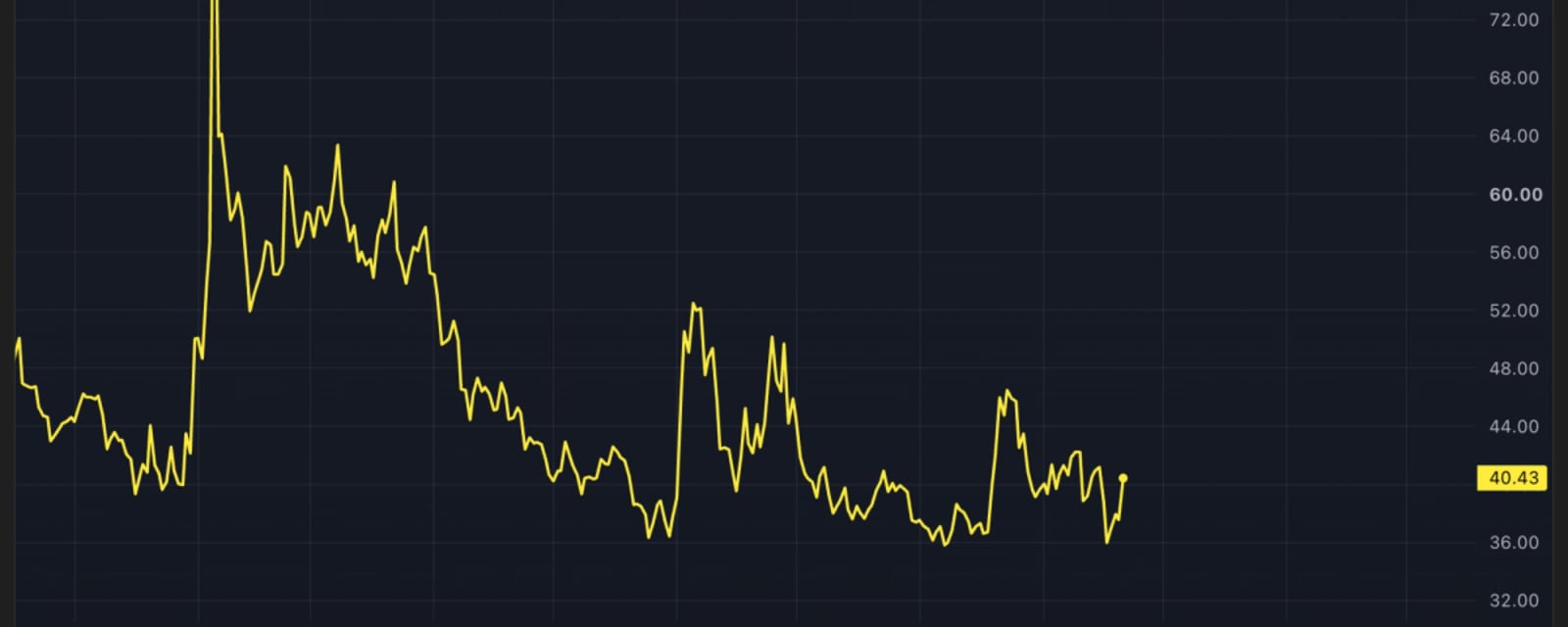
Key Takeaways
- • Hyperliquid has launched perpetual futures linked to its native token (HYPE), expanding its on-chain derivatives platform beyond cryptocurrency to commodities and indices with 300+ markets available.
- • President Trump signaled a regulatory pathway toward CFTC oversight of Hyperliquid's decentralized perpetual futures exchange, suggesting potential near-term legalization of perp trading on traditional asset classes including stocks and commodities.
- • HYPE token surged 18% to an all-time high of $94.46 as of September 2026, driven by platform momentum and constrained circulating supply (only 26% of maximum supply in circulation).
- • Hyperliquid has processed over $633 billion in total traded volume across perpetual and spot markets, establishing itself as the dominant on-chain derivatives venue and attracting both traditional and crypto traders via partnerships including MetaMask integration offering up to 50x leverage.
- • The growth of perpetual futures threatens traditional exchange business models by eliminating the "roll" revenue stream—a lucrative practice where traders extend expiring contracts—since perpetuals never expire, potentially imperiling revenue for CME Group, Cboe Global Markets, Intercontinental Exchange, and Miami International Holdings.
Summary
Hyperliquid has established itself as the dominant decentralized perpetual futures exchange, now offering derivatives linked to its native HYPE token alongside 300+ other perpetual and spot markets spanning cryptocurrencies, commodities, and indices. The platform operates fully on-chain and non-custodially, available 24/7, and has processed over $633 billion in total traded volume to date. The introduction of HYPE futures contracts—agreements between parties to exchange the fiat-equivalent value of Hyperliquid at predetermined prices on specified future dates—represents a significant expansion of the platform's product suite and signals growing mainstream adoption.
The regulatory environment shifted meaningfully on September 18-21, 2026, when President Trump publicly teased a regulatory pathway toward CFTC oversight of Hyperliquid and decentralized perpetual futures trading more broadly. Trump's comments suggest that regulated perp trading could soon extend beyond cryptocurrencies to traditional asset classes including equities and commodities—categories already experiencing significant volume growth on Hyperliquid. This development has prompted a strategic recalibration among Wall Street participants, with industry observers noting that an embrace of the technology may prove more viable than continued resistance.
The market responded decisively to this momentum: HYPE token rallied 18% to an all-time high of $94.46 despite Bitcoin gaining only 5% weekly, benefiting from the token's constrained circulating supply at just 26% of maximum issuance. Platform accessibility has expanded through partnerships like MetaMask integration, enabling traders to access perpetual futures with up to 50x leverage, further accelerating retail and institutional adoption.
Traditional derivatives exchanges face an existential challenge from perpetual futures' structural economics. Revenue models at CME Group, Cboe Global Markets, Intercontinental Exchange, and Miami International Holdings depend substantially on the "roll"—the practice of extending expiring derivatives contracts, which generates recurring transaction revenue. Perpetuals, by design, never expire, eliminating this revenue mechanism entirely. The two-day market reaction to Trump's comments erased approximately $18 billion in combined market capitalization from these four exchanges, underscoring investor concern about business model disruption. An anonymous board member of a publicly-traded exchange characterized the threat directly: "Traditional exchange economics could be in question."
Go deeper than the headline
Research every firm in this story, track the ones that matter and get the daily briefing — free for 7 days.