
Key Takeaways
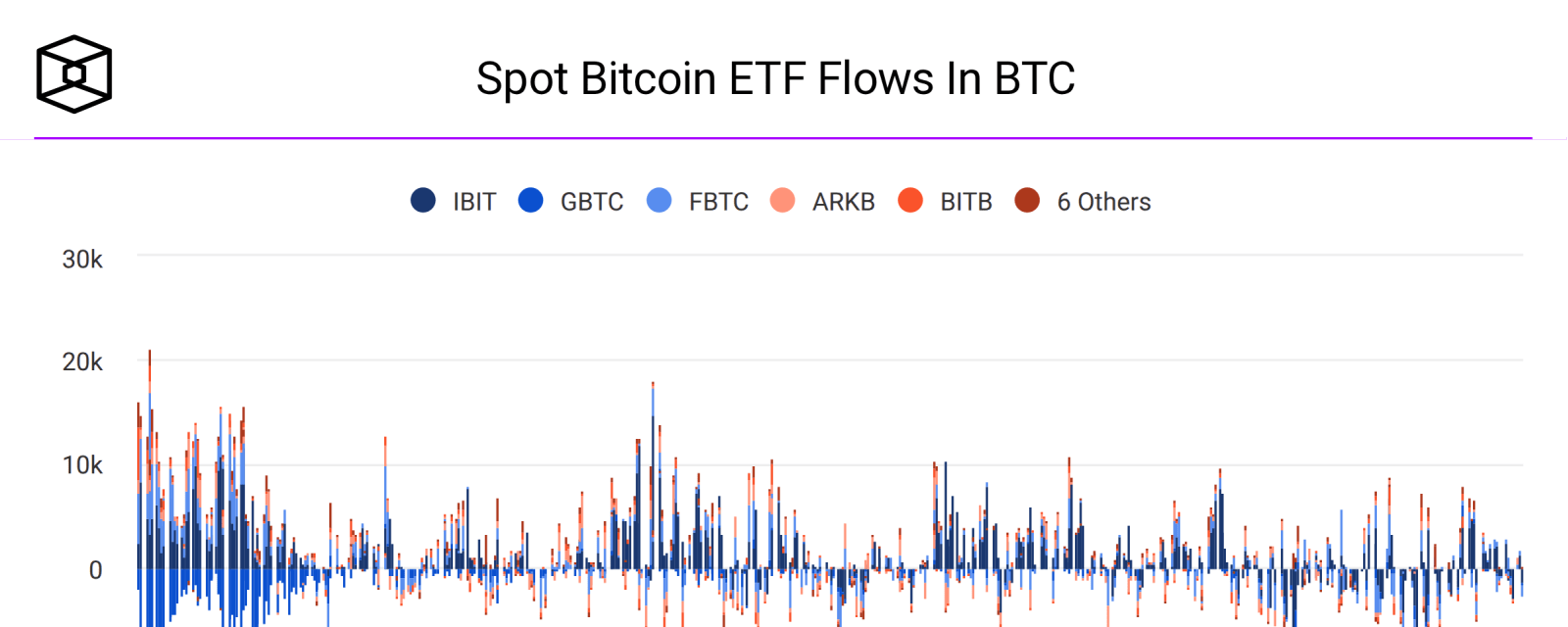
- • Spot bitcoin ETFs recorded $471.3 million in net inflows on Monday, April 7, 2026, marking the largest single-day inflow in six weeks, driven by BlackRock's IBIT ($181.9 million) and Fidelity's FBTC ($147.3 million).
- • March 2026 delivered the first positive monthly inflow period of the year with $1.32 billion, signaling renewed institutional confidence in regulated bitcoin ETF channels after earlier 2026 outflows.
- • Ark Invest/21Shares' ARKB posted notable inflows of $118.7 million, with additional positive flows from Grayscale, Bitwise, and VanEck, indicating broad-based institutional participation across multiple bitcoin ETF providers.
- • Spot Ethereum ETFs simultaneously recorded $120.2 million in net inflows, their largest total since mid-March, suggesting broader institutional interest in cryptocurrency-linked products.
- • Structural buying through ETF channels could support bitcoin price movement beyond current consolidation ranges, though macroeconomic uncertainties—including Middle East geopolitical tensions and oil price volatility—may limit upside potential.
Summary
U.S. spot bitcoin ETFs experienced their strongest inflow day in six weeks on Monday, April 7, 2026, attracting $471.3 million in net inflows across twelve products. BlackRock's IBIT led the surge with $181.9 million, followed by Fidelity's FBTC at $147.3 million, according to data from SoSoValue. Ark Invest and 21Shares' ARKB contributed $118.7 million, with additional positive flows into products from Grayscale, Bitwise, and VanEck. This performance represents the highest single-day inflow since February 25, 2026, when ETFs recorded $506 million.
The Monday inflow momentum follows a significant recovery in March, which delivered $1.32 billion in aggregate monthly inflows—the first positive month for spot bitcoin ETFs in 2026 after earlier outflows. The pattern reflects what Bitrue research lead Andri Fauzan Adziima characterized as "renewed institutional confidence through regulated channels." Monday's inflows offset earlier weakness, erasing the $173.7 million in outflows recorded on April 1.
Concurrent with bitcoin ETF strength, spot Ethereum ETFs recorded $120.2 million in net inflows, marking their largest daily total since mid-March. The synchronized inflows across multiple cryptocurrency products suggest sustained institutional appetite for regulated digital asset exposure via ETF structures.
Market analysts note that continued structural buying through ETF channels could support bitcoin price appreciation beyond its current consolidation range. However, Adziima cautioned that macroeconomic headwinds may constrain upside momentum. Specifically, escalating geopolitical tensions in the Middle East—including the ongoing U.S.-Iran conflict now in its second month—continue to weigh on both equities and cryptocurrency markets. President Trump's April 7 deadline for Iran to reopen the Strait of Hormuz, coupled with threats of military escalation if unmet, has spiked global oil prices and created uncertainty that could limit risk asset performance across digital and traditional markets alike.
Go deeper than the headline
Research every firm in this story, track the ones that matter and get the daily briefing — free for 7 days.