
Key Takeaways
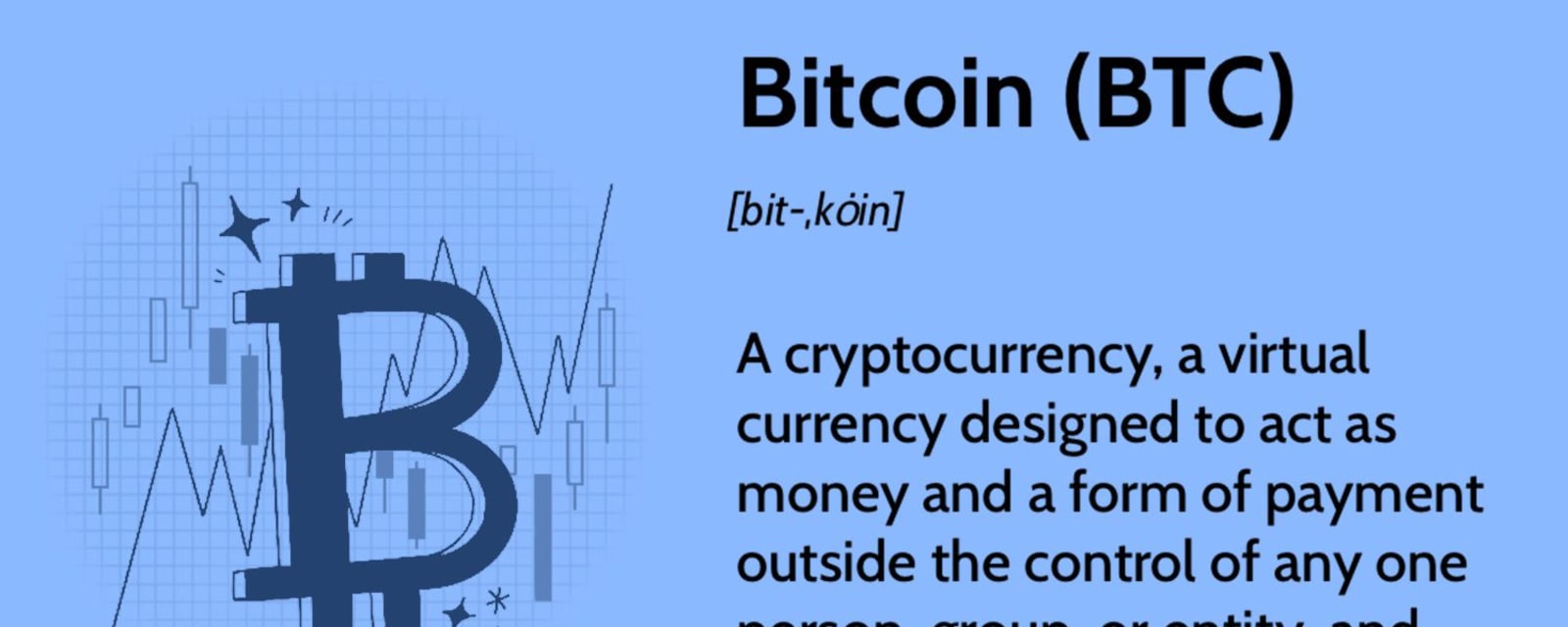
- • Bitcoin (BTC) is a decentralized digital currency that operates on blockchain technology, enabling peer-to-peer transactions without intermediaries such as banks or governments, fundamentally removing the need for trusted third-party involvement in financial settlements.
- • The cryptocurrency functions as both a medium of exchange and a store of value, designed to operate outside the control of any single person, group, or entity, addressing a core use case for institutional investors evaluating non-sovereign payment systems.
- • Bitcoin mining operates as a distributed consensus mechanism that validates pending transactions and adds them to the blockchain in chronological order; successful solo miners currently receive a block reward of 3.125 BTC plus associated transaction fees per block solved.
- • Current pricing context (as of April 28, 2026): Bitcoin trades at approximately $75,203.93 USD per BTC based on supplemental data, with 1 USD equivalent to 0.00001293 BTC, reflecting significant volatility and institutional adoption relative to traditional asset classes.
- • Investopedia's comprehensive resource addresses core institutional considerations including acquisition mechanisms (digital wallet setup and exchange selection), storage solutions, mining economics, regulatory frameworks, and comparative analysis against alternative investments such as gold and forex exposure.
Summary
Bitcoin represents a foundational innovation in digital payments infrastructure. As defined by Investopedia's updated April 2026 analysis, Bitcoin (BTC) is a decentralized cryptocurrency engineered to function as money and payment mechanism operating entirely outside the control of any single person, group, or entity. This architecture eliminates the requirement for trusted third-party intermediaries—traditional financial institutions, central banks, or mints—in the execution and settlement of financial transactions. The underlying technology is blockchain, which enables direct peer-to-peer value transfer with cryptographic verification.
The operational mechanics of Bitcoin center on mining, a distributed consensus system that validates pending transactions and incorporates them into the blockchain while enforcing strict chronological ordering. Mining participants (nodes) compete to solve complex cryptographic puzzles; successful miners receive compensation in the form of newly issued Bitcoin plus transaction fees. Under current Bitcoin protocol parameters, solo miners who successfully solve a block receive 3.125 BTC per block solved, supplemented by all transaction fees included in that block. This mechanism simultaneously secures the network, validates transactions, and distributes new currency supply in a predetermined manner.
For institutional participants evaluating Bitcoin acquisition, the primary pathway involves establishing a digital wallet followed by engaging a cryptocurrency exchange platform. Major exchanges including Coinbase, Gemini, and others facilitate purchase, sale, storage, and transfer of Bitcoin holdings. The ecosystem has matured significantly to support institutional custody, custody-grade infrastructure, and integration with traditional portfolio management systems, though regulatory frameworks and operational risk remain material considerations for alternative investment professionals.
Investopedia's resource framework addresses multiple institutional use cases: comparative analysis against traditional hedges (particularly gold), exposure mechanisms through derivatives and structured products (including forex trading and IRA vehicles), portfolio allocation methodologies, and regulatory compliance requirements. As of April 2026, pricing data reflects approximately $75,203.93 USD per BTC, establishing context for position sizing and capital allocation decisions within alternative and institutional portfolios.
Go deeper than the headline
Research every firm in this story, track the ones that matter and get the daily briefing — free for 7 days.