
Key Takeaways
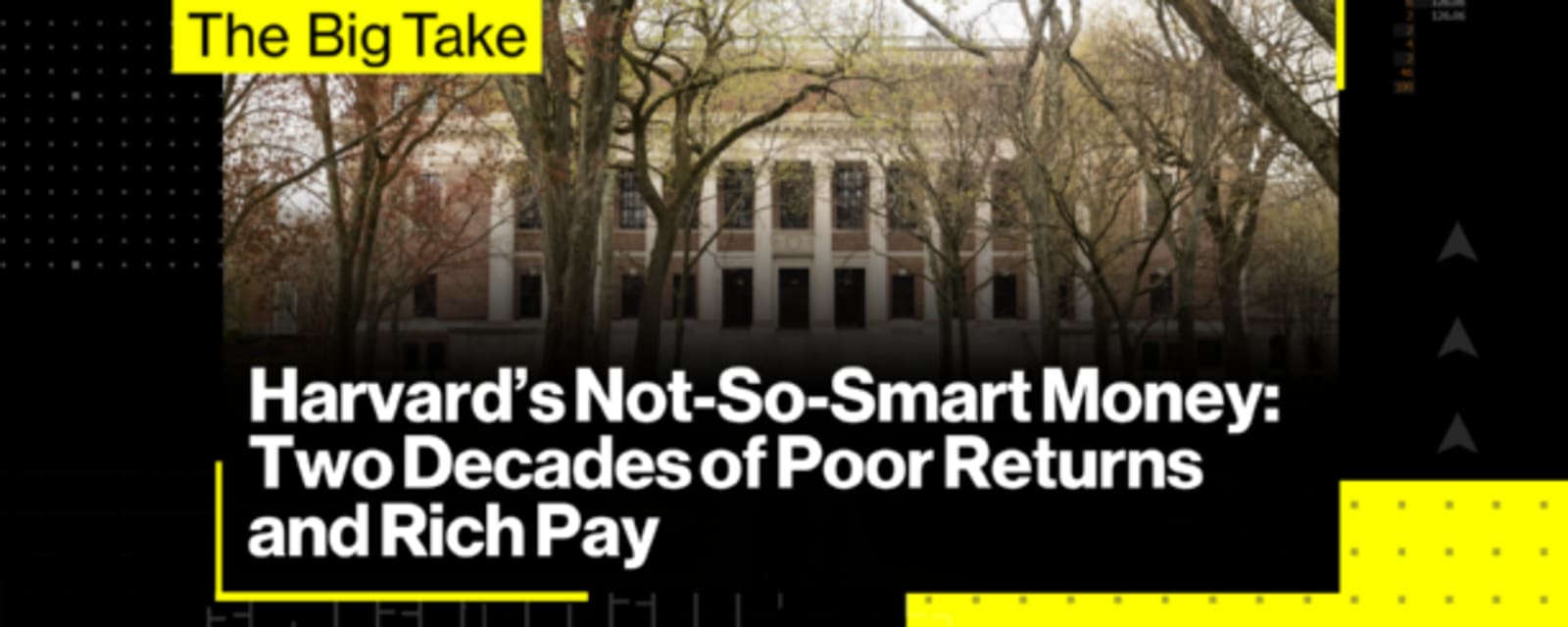
- • Harvard's endowment has significantly underperformed peer institutions over a two-decade period, despite maintaining a $51–$53 billion asset base and pioneering alternative investment strategies through Harvard Management Co. (HMC).
- • The university's investment strategy, which pivoted heavily toward private equity and hedge funds under Ron Daniel's leadership (1989–2004), has failed to deliver competitive returns relative to other major endowments in recent years.
- • Harvard employs 230 investment professionals and spends approximately $800 million annually on management—roughly three times the undergraduate financial aid budget—yet has lagged peers on long-term performance metrics.
- • The endowment's risk management has been structurally flawed, with the institution consistently raising risk exposure before major market downturns and reducing exposure immediately before market recoveries, resulting in poor market-timing outcomes.
- • Despite its pioneering role in establishing alternative assets as a core endowment strategy, Harvard's execution and personnel changes have failed to sustain competitive advantage, leaving what was once a leading institutional investment program behind comparable funds.
Summary
Harvard University's $51–$53 billion endowment, once considered an innovator in institutional asset management, has become a cautionary case of underperformance over the past two decades. The story traces back to Ron Daniel, the McKinsey managing partner who served as Harvard's treasurer from 1989 to 2004 and chaired the endowment fund's board. Under Daniel's leadership, Harvard built Harvard Management Co. (HMC), an in-house investment operation housed in Boston's Federal Reserve building that pioneered the use of alternative assets—including private equity and hedge funds—as core endowment holdings when these strategies were considered exotic for university funds.
However, despite this early strategic innovation and the scale of its asset base, Harvard's endowment has fallen significantly behind peer institutions on long-term return metrics. The investment program's structural challenges became apparent through poor market timing: the university systematically increased risk exposure before major market downturns and reduced exposure immediately before market recoveries, a pattern that has compounded underperformance over two decades. This dynamic highlights a fundamental disconnect between the endowment's sophisticated positioning and its operational execution.
The human and financial costs of underperformance have remained substantial. Harvard currently employs 230 investment professionals and allocates approximately $800 million annually to endowment management—a figure equivalent to three times the university's undergraduate financial aid budget. Despite this investment in personnel and infrastructure, combined with a strategic focus on alternative assets that has generated mixed results, the endowment continues to lag benchmark comparisons and peer performance. Recent shifts in investment strategy, including renewed emphasis on private equity, have yet to reverse the longer-term performance trajectory, according to Bloomberg's reporting on the endowment's September 2024 assessment.
The case illustrates a critical risk for institutional investors: pioneering a strategy does not guarantee sustained competitive advantage if execution, personnel continuity, and market-timing discipline erode over time. Harvard's experience suggests that even well-capitalized, professionally managed endowments with significant resources and scale can underperform when organizational and investment process challenges accumulate.
Go deeper than the headline
Research every firm in this story, track the ones that matter and get the daily briefing — free for 7 days.