
Key Takeaways
- • Ray Dalio, founder of Bridgewater Associates, identifies "classic signs" of a bubble in the current AI market, drawing historical parallels to the 1929 crash, railroad bubble of the 1800s, and the 2000 internet boom—a warning from an institutional investor with a decades-long track record studying market cycles.
- • Dalio distinguishes between "wealth" (paper asset valuations) and "money" (actual cash), demonstrating how AI companies are exhibiting the same valuation mechanics as historical bubbles: massive implied valuations on minimal actual cash deployed, exemplified by SpaceX's record IPO and Anthropic's near-$2 trillion valuation.
- • The mechanism Dalio describes creates systemic risk: when an asset purchased at $100 is leveraged and confidence erodes, that same asset can collapse to $25 while debt obligations remain unchanged, forcing simultaneous liquidation across the sector.
- • Current AI funding rounds exhibit the wealth-money gap Dalio warns of—each new capital injection gets marked up into multiples of implied wealth without proportional cash inflow, creating a structural vulnerability to confidence shocks.
Summary
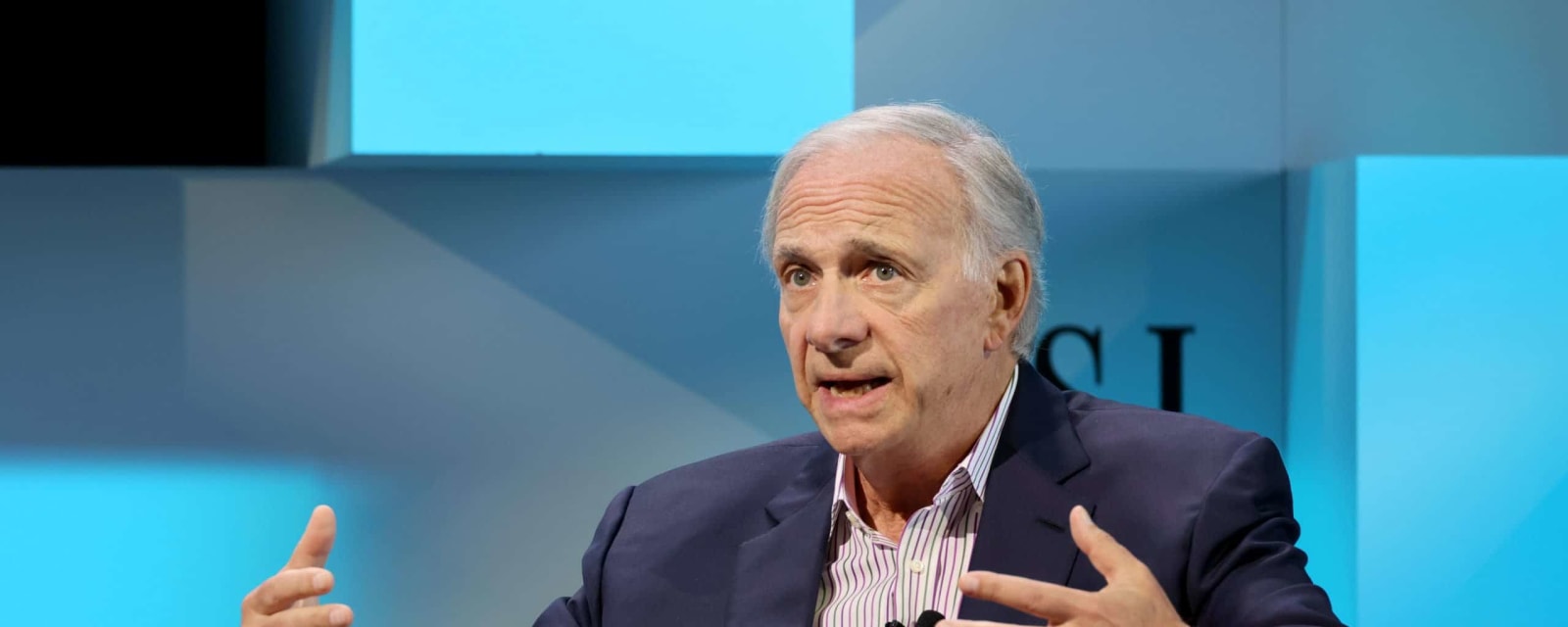
Ray Dalio, the billionaire founder of Bridgewater Associates—the world's largest hedge fund by assets—has publicly compared the current artificial intelligence market bubble to historical financial crashes, specifically identifying parallels to 1929 and the 2000 internet boom. Speaking on Steven Bartlett's Diary of a CEO podcast, Dalio provided a mechanical explanation for how such bubbles form and eventually collapse, grounding his analysis in specific valuation dynamics rather than vague sentiment indicators.
Dalio's core thesis rests on a distinction between "wealth" and "money." Wealth represents the paper value of assets as marked in financial statements and investment databases, while money is actual spendable cash. This gap is the critical vulnerability. Dalio illustrates the concept with a straightforward example: a startup that raises $50 million in funding might be valued at $1 billion, making its founder a "billionaire on paper," yet only $50 million in real cash has moved through the system. The remaining $950 million is implied wealth—a valuation multiple applied to a small pool of actual capital.
The AI sector exhibits precisely this dynamic in 2026. SpaceX recently completed the largest initial public offering in history, while Anthropic is being valued near $2 trillion. Each new funding round pushes company valuations sharply higher, yet the actual cash flowing into these businesses grows at a much slower pace. This creates a structural vulnerability: the wealth pyramid sits on an increasingly thin base of actual money.
Dalio's mathematical framework for how bubbles collapse is stark and mechanically precise. Purchase an asset for $100, lever it aggressively when confidence is high, and when that confidence cracks and investors simultaneously need cash, the same asset can plummet to $25 in value while the original loan obligation remains due in full. This forced liquidation cascade is what transforms paper losses into systemic financial stress. Dalio's analysis suggests the AI market exhibits these classic bubble characteristics—transformative technology creating investor certainty that valuation multiples become secondary to narrative momentum, exactly as occurred during the railroad boom of the 1800s and the dot-com era of 1999-2000.
Go deeper than the headline
Research every firm in this story, track the ones that matter and get the daily briefing — free for 7 days.