
Key Takeaways
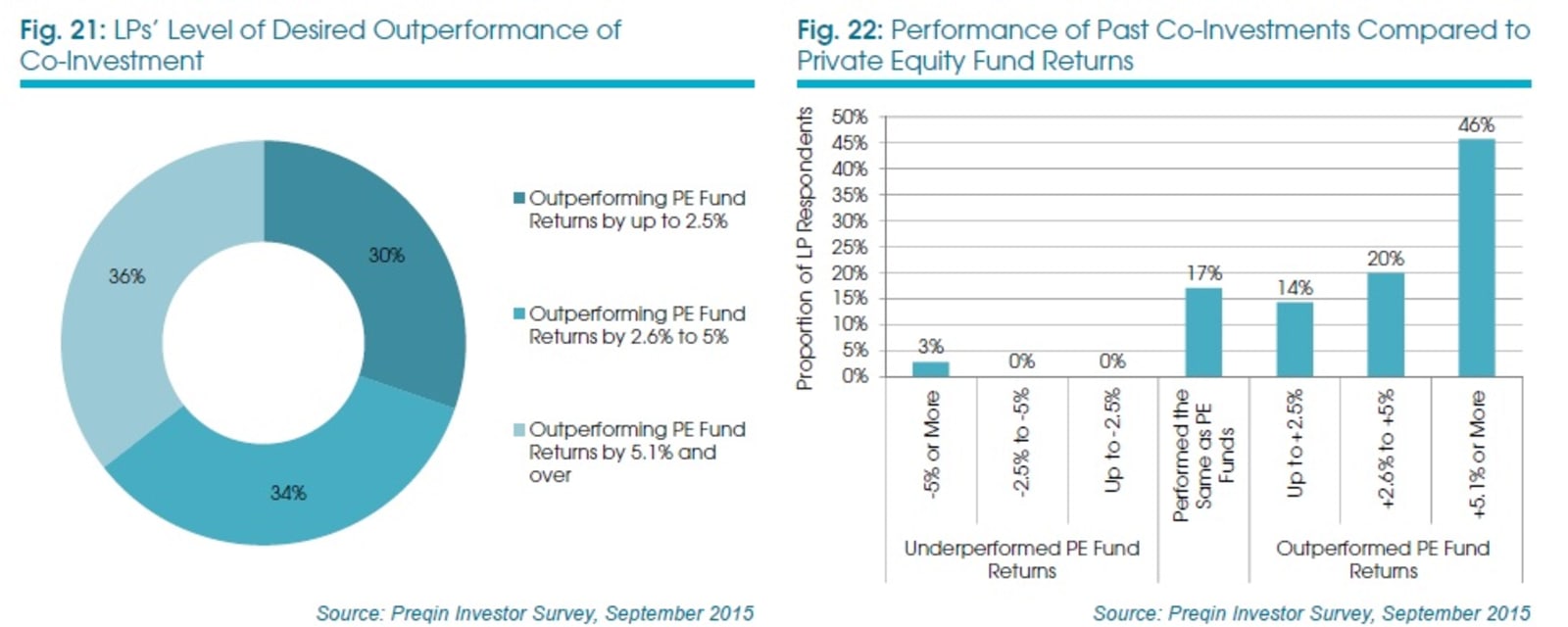
- • Preqin reported that 80% of surveyed limited partners saw co-investments outperform private equity funds, with nearly half reporting a margin of more than 5%.
- • 87% of 320 surveyed general partners offered co-investments or planned to for future fundraising, and 84% said they strengthened investor relationships.
- • Nearly 23% of GPs raised at least half their capital from co-investments in the first half of 2015, up from 11% for all of 2014.
- • The share of $1 billion-plus private equity deals including co-investment capital fell to 20% in early 2015 from 57% in 2014, according to Preqin.
- • Pension funds such as Ontario Municipal Employees' Retirement System and UK's Railpen are exploring in-house or simplified private equity access.
Summary
New research from data provider Preqin indicates that co-investments in private equity are outperforming traditional commingled fund structures. Preqin reported that 80% of the limited partners it surveyed saw co-investments outperform private equity funds, and nearly half saw a margin of more than 5%. Christopher Elvin, head of private equity products at Preqin, said the most common motivation for LPs to co-invest beyond their typical fund commitments is the prospect of better returns. He cautioned that several investors said it was "too early to tell how their stakes will ultimately perform." Elvin added that, provided LPs have sufficient resources, co-investment opportunities should remain attractive due to their lower fees and greater potential returns.
General partners are also increasingly embracing the structure. Of the 320 managers Preqin questioned, 87% said they either offered co-investments or planned to for future fundraising. Additionally, 84% said co-investments helped forge stronger investor relationships, and 76% said the option improved their fundraising capabilities. Nearly a quarter (23%) of GPs reported raising at least half of their capital from co-investments in the first half of 2015, compared with 11% for the whole of 2014.
The participation of co-investment capital in large transactions has been uneven. Among the largest private equity deals completed in 2014, valued at $1 billion or more, Preqin said 57% included co-investment capital. For the first half of 2015, that figure fell to just 20%.
The trend extends to institutional investors as well. Pension funds on both sides of the Atlantic are exploring a simplified and cheaper way to access private equity. The Ontario Municipal Employees' Retirement System has established an in-house private equity capability, while the UK's Railpen is exploring a similar move within its £21 billion ($32 billion) portfolio.
Go deeper than the headline
Research every firm in this story, track the ones that matter and get the daily briefing — free for 7 days.