
Key Takeaways
- • Private equity portfolio companies are facing a liquidity crisis as a record backlog of unsold assets collides with persistently elevated interest rates and compressed valuations, threatening the viability of the asset class's traditional exit strategy.
- • Over 13 million US workers are employed by private equity-backed firms spanning healthcare, retail, food service, and consumer goods—creating systemic employment and community infrastructure risks if distressed exits accelerate.
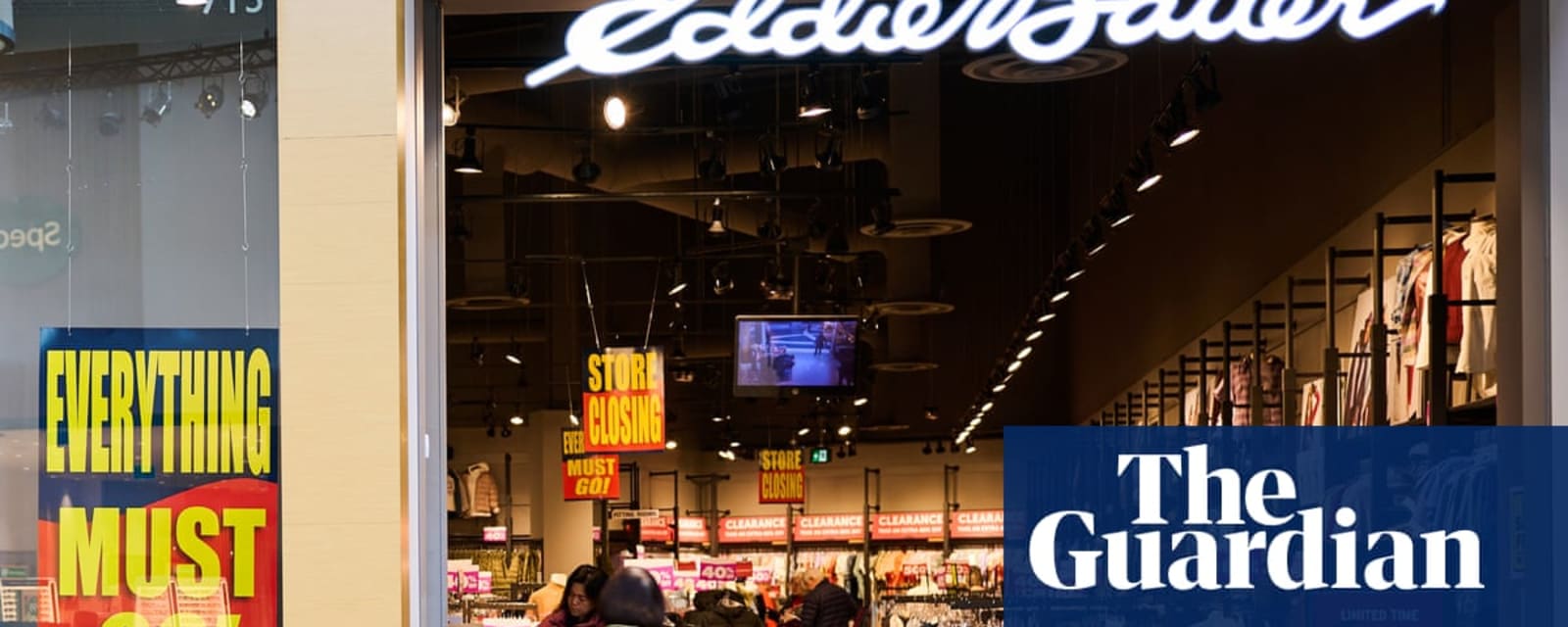
- • High-profile bankruptcy filings including Saks, Eddie Bauer, Steward Health Care, and complete failures of Kmart and JoAnn Fabrics demonstrate the strain on leveraged balance sheets, particularly in capital-intensive sectors like healthcare and brick-and-mortar retail.
- • Private equity's debt-loading acquisition model—designed to extract returns through operational restructuring and financial engineering—is deteriorating as refinancing costs spike and buyer appetite contracts, forcing funds to hold mature portfolio companies beyond optimal holding periods.
- • According to the Private Equity Stakeholder Project, firms are sitting on a "record number of unsold companies" that cannot clear sellers' price expectations, signaling fundamental misalignment between portfolio valuations and market demand.
Summary
Private equity's dominant position across American commerce is now confronting an existential stress test. The asset class, which has evolved from financial niche to systemic economic force, is encountering a perfect storm of structural headwinds: persistent interest rate elevation, compressed acquisition multiples, and a record accumulation of portfolio companies awaiting exit. This convergence threatens not only fund returns but also the operational stability of millions of workers and dozens of critical service verticals.
The scale of private equity's footprint is substantial. PE-backed firms employ over 13 million Americans across diverse sectors—from healthcare infrastructure (rural hospitals, hospice care, dental practices) to household retail names (PetSmart, Saks, Eddie Bauer) to consumer brands (Dave's Hot Chicken, Birkenstock, Pyrex). This concentration creates systemic risk. Recent high-visibility failures illustrate the vulnerability: Steward Health Care's collapse eliminated thousands of jobs and left communities without local hospital access; Saks and Eddie Bauer have filed for bankruptcy; Kmart and JoAnn Fabrics have been liquidated entirely. Each represents a failure of the leveraged buyout model to generate sustainable value.
The underlying mechanics of the crisis are straightforward. Private equity acquires companies, loads them with debt to finance the purchase, and extracts cash flows through restructuring and operational improvements. Returns materialize through multiple arbitrage—selling at higher valuations than entry—or dividend recapitalizations. That model depends on access to cheap debt and willing buyers at premium valuations. Both conditions have eroded. Interest rates remain elevated, making refinancing costly and new acquisitions expensive. Simultaneously, exit velocity has slowed. According to Jim Baker, executive director of the Private Equity Stakeholder Project, firms are managing "a record number of unsold companies, many of which they've been unable to sell…or at least unable to sell at the prices that they're looking for."
The human and institutional consequences extend well beyond fund performance metrics. Layoffs, store closures, and service disruptions ripple through local economies. Rural hospital closures eliminate access to emergency care. Retail consolidation reduces consumer choice and employment. The burden falls disproportionately on workers and communities with limited alternative opportunities. As private equity contends with maturation of portfolio holdings and compressed exit multiples, pressure will mount to realize returns—potentially accelerating distressed transactions and compounding systemic strain.
Go deeper than the headline
Research every firm in this story, track the ones that matter and get the daily briefing — free for 7 days.