
Key Takeaways
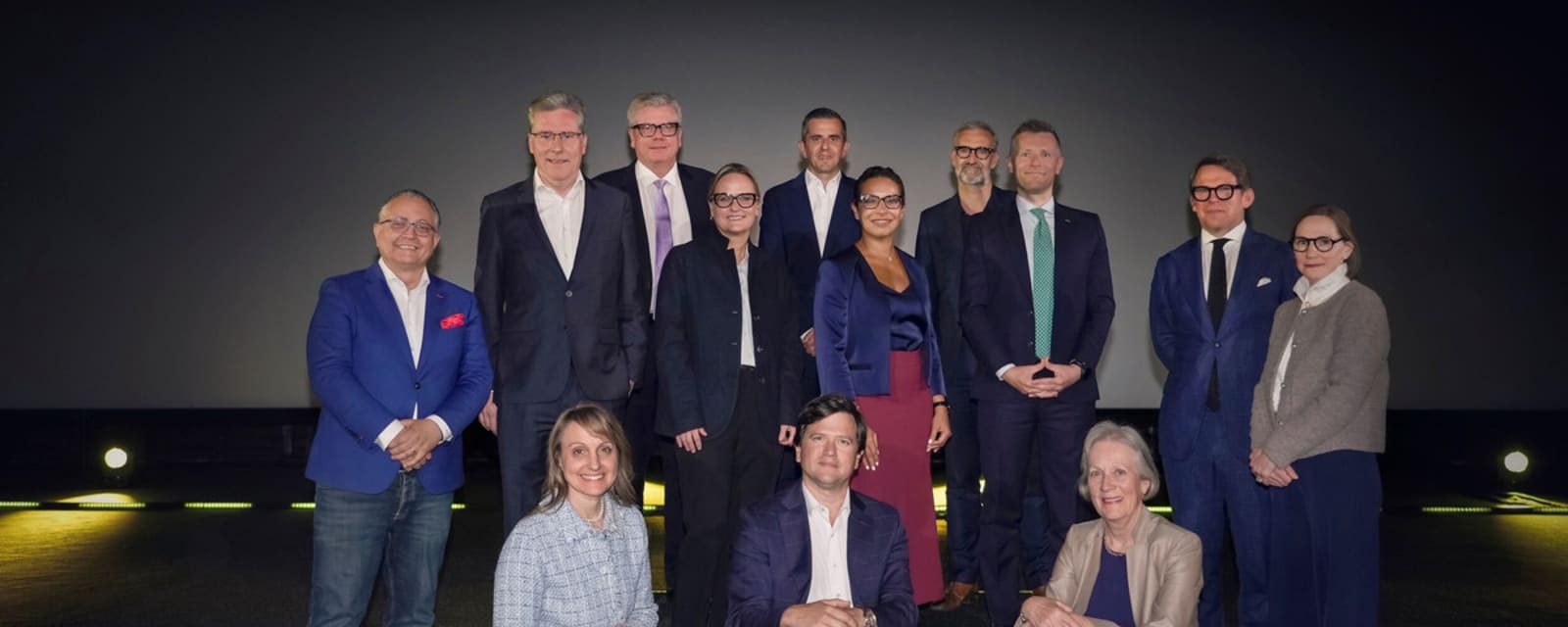
- • Paperjam hosted an alternative investment event at the Kinepolis in Luxembourg on 28 April 2026, where ten speakers each had six minutes to present views, with Alfi CEO Serge Weyland presenting.
- • M&G Luxembourg CEO Micaela Forelli argued that Europe holds nearly €14trn in idle savings and that the challenge is channelling capital into the real economy, with alternatives now a key channel since banks withdrew after 2008.
- • European Investment Fund's Adelaide Cracco framed green finance as an economic and strategic imperative tied to energy security, industrial resilience and technological sovereignty, requiring large-scale private capital mobilisation through alternative funds.
- • Claus Mansfeldt of SwanCap Investment Management promoted secondaries as lower-risk, more predictable entry into private equity, trading limited outperformance potential for greater visibility and shorter return timeframes.
- • Clearlake Capital's Michael Maldener said private credit is in a transitional phase from retail opening up, with a mismatch between liquidity expectations and illiquid assets.
- • Stonehage Fleming's Raphaël Eber and ICG Luxembourg's Hind El Gaidi positioned family offices and Luxembourg's ecosystem density as strategic advantages.
Summary
Paperjam hosted an alternative investment event at the Kinepolis on Tuesday, 28 April 2026, presented by Alfi CEO Serge Weyland. The format featured ten speakers with six minutes each. Paperjam's write-up distilled six quotes from the evening.
Micaela Forelli, CEO of M&G Luxembourg, opened the discussion with an analogy about small recurring royalties, arguing that the issue is less a shortage of capital than its deployment. She cited nearly €14trn in savings still idle in Europe and said alternative investments, long seen as marginal, have become a key channel since banks retreated after the 2008 crisis. The priority, she said, is democratising access within a structured framework.
Adelaide Cracco, Head of Greentech and Social Impact at the European Investment Fund, presented the green transition as an economic and strategic necessity rather than an ideological choice. She tied sustainable finance to energy security, industrial resilience and technological sovereignty, and warned that without substantial private capital, particularly through alternative funds, Europe risks merely enduring rather than financing its own future.
Claus Mansfeldt, chairman of SwanCap Investment Management, focused on risk-adjusted returns and the secondaries market, which he compared to a matured wine. Secondaries involve buying stakes in partially deployed funds, offering clearer visibility into asset quality and performance. According to his framing, this provides a comparatively safer and more liquid entry route in a tighter market, though with more limited outperformance potential and no elimination of risk.
Michael Maldener, who oversees portfolio management, distribution and marketing at Clearlake Capital, argued that private credit is not collapsing despite tensions, particularly in the United States. He characterised the situation as a transitional phase linked to broader retail access, citing stable returns and limited defaults, while a gap between liquidity expectations and the illiquid nature of the asset class is creating tension. He called for greater education, transparency and discipline in Europe.
Raphaël Eber, partner and global head of corporate services at Stonehage Fleming Luxembourg, described family offices evolving into global management hubs, with a strategic shift toward alternative assets within long-term wealth-transfer planning. He cited Luxembourg's regulatory stability and financial expertise as supports for this growth.
Hind El Gaidi, Head of ICG Luxembourg and Chair of the LPEA, closed the evening by describing Luxembourg's concentration of structuring, legal, tax and management expertise as a rare competitive advantage that speeds decisions and capital flows. She warned that this edge cannot be assumed and called for stronger appeal to talent and fuller technology integration.
Go deeper than the headline
Research every firm in this story, track the ones that matter and get the daily briefing — free for 7 days.