
Key Takeaways
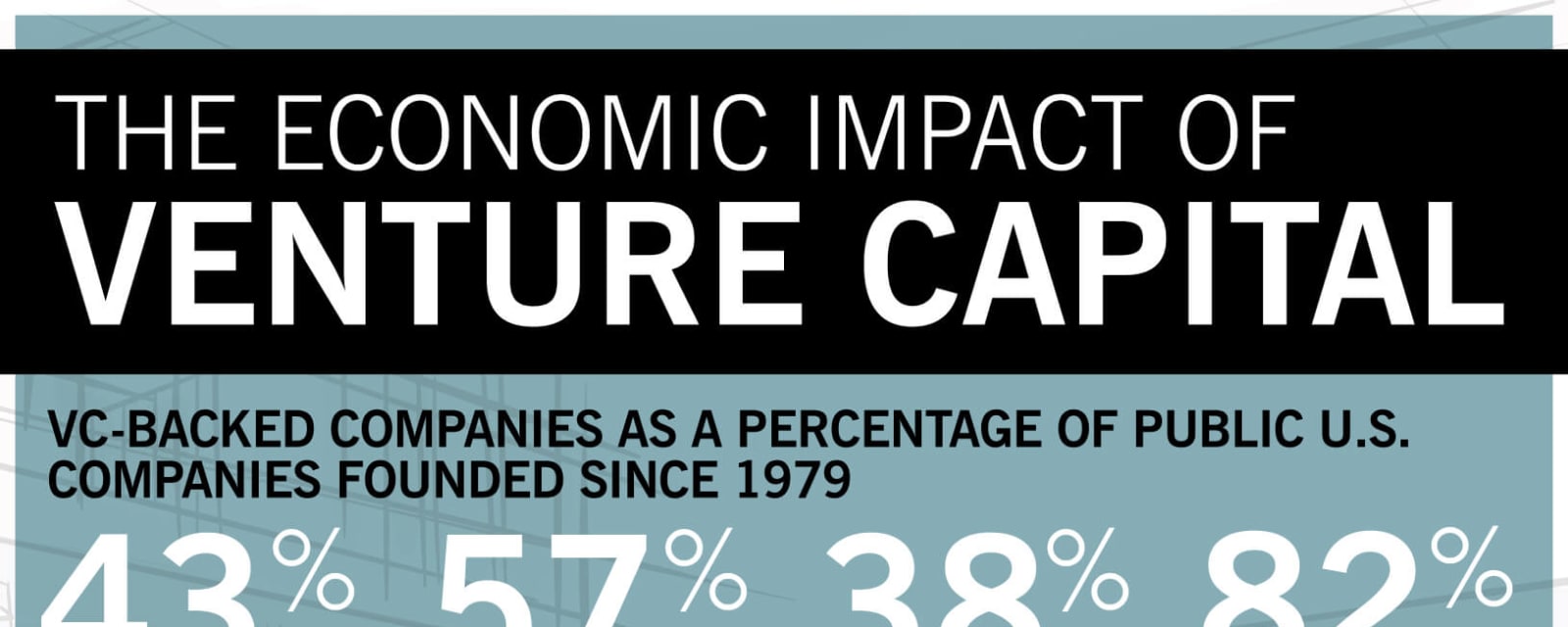
- • Venture capital-backed companies account for 41% of total U.S. market capitalization and 62% of U.S. public companies' research and development spending, demonstrating outsized economic influence relative to the small proportion of startups receiving VC funding.
- • VC funds invest in only 0.19% of new U.S. businesses, yet VC-backed public companies spent $115 billion on research and development, underscoring the concentration of innovation capital in a narrow segment of the economy.
- • From 2004 to 2014, 65% of the 21,000 startups funded by venture capital lost money, with an additional 25% returning less than five times the initial investment, highlighting the inherent risk profile and high failure rates within VC portfolios.
- • Annual VC investment has expanded dramatically from $22 billion in 2004 to $241 billion in 2022, representing a fundamental shift in the scale and scope of venture funding available to early-stage companies.
- • VC-backed companies account for 48% of patent value in the U.S. economy, indicating that venture-funded firms disproportionately drive technological advancement and intellectual property creation relative to their overall business footprint.
Summary
Venture capital represents a critical but highly selective driver of U.S. economic innovation and value creation. Despite funding less than 0.2% of new American businesses, VC-backed companies have achieved commanding positions in both public equity markets and research spending. These firms account for 41% of total U.S. market capitalization and generate 62% of all research and development spending by U.S. public companies, according to research cited by Stanford Graduate School of Business. This concentration of economic impact illustrates how VC capital, though deployed to a tiny fraction of the startup ecosystem, shapes the nation's technological trajectory and corporate landscape.
The historical expansion of venture funding has been substantial. Annual VC disbursements grew from $22 billion in 2004 to $241 billion in 2022, reflecting both increased investor appetite and the emergence of mega-funds targeting later-stage investments. More recently, 2021 marked a record-high year with $254 billion deployed, representing 1.12% of GDP—nearly double the 2020 figure. This acceleration has been driven by exceptionally low interest rates and abundant capital seeking alternative asset returns.
However, the venture model carries significant risk for limited partners. Analysis of 21,000 startups funded between 2004 and 2014 revealed that 65% lost money for investors, while a further 25% returned less than five times the initial capital deployed. Only a small percentage achieved the outsized returns that justify venture investing's risk profile. Despite these unfavorable statistics at the portfolio level, VC-backed companies dominate patent value creation, accounting for 48% of U.S. patent value. This divergence between financial returns and technological impact reflects venture capital's dual role: as a commercial investment vehicle with poor median outcomes, and as a de facto innovation funding mechanism that concentrates R&D capital in high-risk, high-potential ventures.
The data underscores a paradox for institutional investors evaluating venture capital's contribution to economic growth. The sector's outsized influence on patent creation, R&D spending, and public market valuation stands in sharp contrast to both its narrow addressable market (0.19% of new businesses) and the unfavorable return distribution experienced by the majority of portfolio companies. This dynamic suggests that venture capital's economic significance derives less from broad-based business success than from the occasional breakthrough successes that generate transformational public companies and technological advances.
Go deeper than the headline
Research every firm in this story, track the ones that matter and get the daily briefing — free for 7 days.