
Key Takeaways
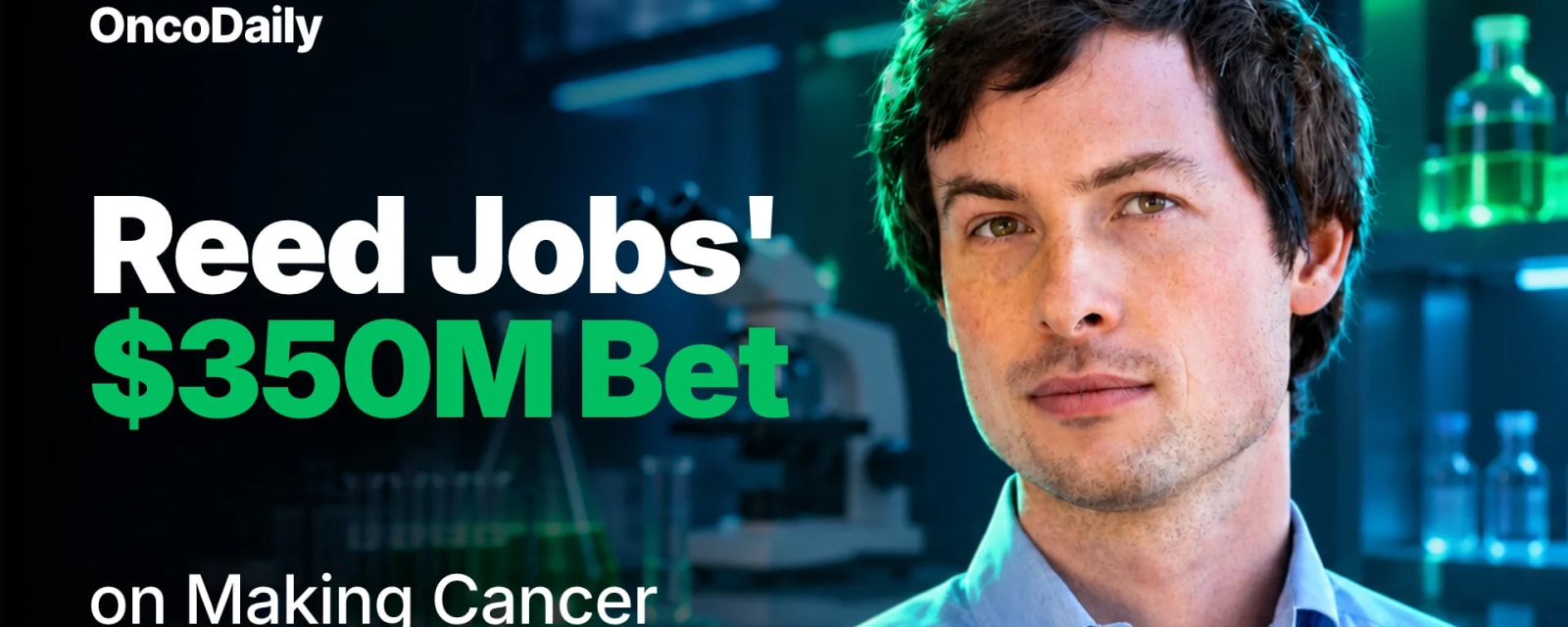
- • Yosemite, the cancer-focused venture firm founded by Reed Jobs, closed its second fund at $350 million, according to Fortune's November 4, 2026 report, and described the fund as oversubscribed.
- • Investors include Amgen, AbbVie, MIT, Memorial Sloan Kettering Cancer Center, and venture capitalist John Doerr, combining biotech venture capital with philanthropic funding for early-stage science.
- • Yosemite's model directs 2.5% of fund AUM plus $1 million annually from management fees to a donor-advised charitable vehicle that funds preliminary research.
- • The firm had deployed more than $18 million in grants since 2023 as of a February 12, 2026 announcement, including work in partnership with the American Cancer Society.
- • The fund's first vehicle closed in 2024 at roughly $263 million, and its stated goal is to make cancer a non-lethal disease rather than to cure it outright.
Summary
Yosemite, the cancer-focused venture capital firm founded by Reed Jobs, son of Apple co-founder Steve Jobs, has closed its second fund at $350 million, according to Fortune, which reported the milestone on November 4, 2026 following an interview with Jobs. He described the fund as oversubscribed, exceeding its original target. In January 2026, the firm had secured an initial $200 million toward that goal. Its first fund closed in 2024 at approximately $263 million. Investors include Amgen, AbbVie, the Massachusetts Institute of Technology, Memorial Sloan Kettering Cancer Center, and venture capitalist John Doerr.
Jobs founded Yosemite in 2023 as an independent firm after spinning it out of Emerson Collective, the organization established by his mother, Laurene Powell Jobs. He has framed the mission as transforming cancer into a disease that can be detected early, treated effectively and managed over time, rather than curing it outright. He has cited the transformation of HIV treatment as an analogy, while acknowledging that cancer comprises hundreds of biologically distinct diseases.
The firm's model pairs traditional venture investing with philanthropic funding. In a July 2026 TechCrunch interview, Jobs said roughly one-third of venture investments go to companies Yosemite helps create, including ventures built with academic researchers. Yosemite also directs 2.5% of fund AUM and $1 million annually from management fees to a donor-advised charitable vehicle. According to a February 12, 2026 announcement, that vehicle had deployed more than $18 million in research and healthcare grants since 2023. Grant areas include AI in oncology, the tumor microenvironment, cancer vaccines and targeted drug delivery, with 2025 American Cancer Society–Yosemite recipients including Jennifer Doudna, Carolyn Bertozzi, William Kaelin, Stephen Elledge and Kai Wucherpfennig.
The first fund's portfolio includes Chai Discovery, Teal Health, Tune Therapeutics and Sage Care. Yosemite also supported preclinical work by Craig Crews at Yale that contributed to the foundations of Quarry Thera, and an MIT project led by Jeremiah Johnson on an antibody-based drug-delivery approach that showed stronger antitumor activity in preclinical breast and ovarian cancer models, according to the February announcement. Those findings still require clinical validation.
Jobs has said pharmaceutical partners can become important as early-stage technologies reach clinical development, though investor participation does not guarantee backing for any specific discovery. The fund's success will ultimately be judged by validated advances in prevention, diagnosis, treatment and survival rather than by capital raised or companies formed.
Go deeper than the headline
Research every firm in this story, track the ones that matter and get the daily briefing — free for 7 days.