
Key Takeaways
- • Warp, a company building AI-driven robotic labs for drug discovery chemistry, launched with a Series A led by Lightspeed Venture Partners, according to Lightspeed's post announcing the investment.
- • Warp's first service is lead optimization chemistry for pharma and biotech clients, with expert chemists initially doing most work and robots taking over repetitive, high-volume steps over time.
- • The company's thesis rests on two pressures: US policy, including the BIOSECURE Act, pushing outsourced chemistry away from China, and a shortage of lab data that captures failed experiments, which Warp plans to record systematically.
- • Lightspeed cites Deloitte estimates that the 20 largest drug companies spent an average of $2.23B per approved drug in 2024, and that only about 1 in 10 drugs entering human trials is approved.
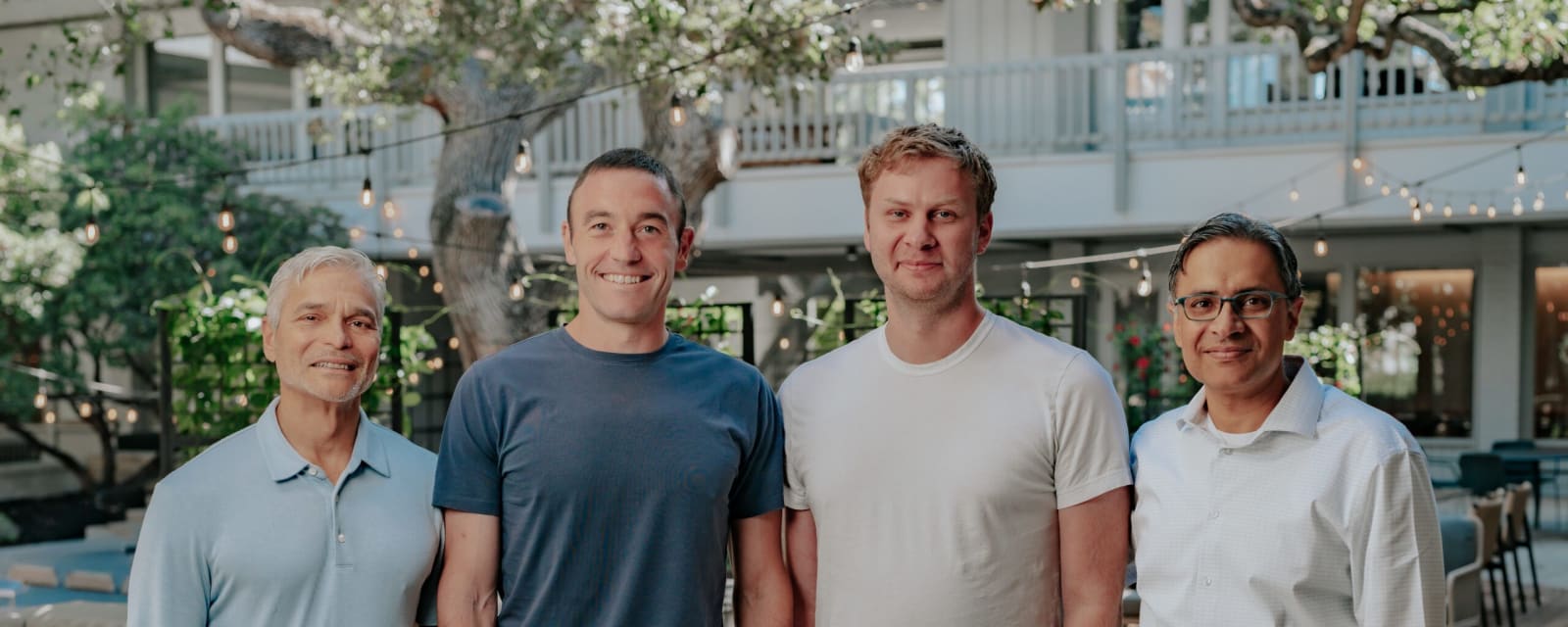
- • The team includes CEO Kevin Weil, former OpenAI Chief Product Officer; COO DJ Patil, former US Chief Data Scientist; CSO Sol Reisberg; and co-founder Mano Paluri, formerly at Meta.
Summary
Warp, which launched with a Series A led by Lightspeed Venture Partners, is building AI-driven robotic laboratories that run drug discovery chemistry for pharmaceutical and biotechnology companies. According to Lightspeed's announcement, the company aims both to accelerate drug discovery and to bring outsourced chemistry work back to the United States. Lightspeed cites Deloitte estimates that the 20 largest drug companies spent an average of $2.23B per approved drug in 2024, including the cost of failed candidates, and that only about one in ten drugs entering human trials is approved.
The company targets lead optimization, the stage in which chemists iterate through thousands of molecular variations before a candidate enters trials. Lightspeed notes that a typical contract lab round takes two to three weeks, and a full program often takes two to four years. Lightspeed argues that AI models can only accelerate discovery as fast as laboratories can test their suggestions, and that manual synthesis is constrained by throughput and handoff delays.
Lightspeed highlights policy as a driver of demand. According to the announcement, most outsourced Western pharma chemistry is performed offshore, largely in China, and the BIOSECURE Act, enacted in December 2025 as part of the annual defense bill, limits federal contracts and grants involving 'biotechnology companies of concern.' Lightspeed also cites a 2024 Biotechnology Innovation Organization survey in which 79% of 124 responding companies had at least one contract with, or purchased a product from, a China-based contract manufacturer. Industry estimates cited by Lightspeed suggest US companies could take up to eight years to replace these partners without disrupting programs.
Warp's technical approach centers on data capture. Lightspeed argues that published and internal lab data skew toward successful reactions, while failed experiments are valuable for training models. Warp plans to record every step of every run, including failures, using its own robots, and to use this data both to improve lab operations and to predict which compounds are worth synthesizing. Warp later plans to sell predictions as well as compounds.
The founding team includes Kevin Weil, CEO, formerly Chief Product Officer at OpenAI and leader of OpenAI for Science; DJ Patil, COO, the first US Chief Data Scientist under President Obama; Sol Reisberg, CSO, a medicinal chemist with about 20 years of experience who previously worked at Gilead and Schrödinger; and Mano Paluri, co-founder, who helped found Meta's FAIR lab and most recently served as a VP at Meta Superintelligence Labs. Lightspeed states it has tracked the intersection of AI, robotics, and life sciences for several years and committed to the company in the first meeting. Warp is hiring roboticists, AI researchers, and chemists.
Go deeper than the headline
Research every firm in this story, track the ones that matter and get the daily briefing.